Speak to a maternal child health nurse
Call Pregnancy, Birth and Baby to speak to a maternal child health nurse on 1800 882 436 (Opens in new tab) or video call. Available 7am to midnight (AET), 7 days a week.


Illustration of the female reproductive system.
Your cervix is a channel, referred to as the 'cervical canal' and has the following functions:
Your cervix plays an important role during pregnancy. It protects your baby from the time you conceive until just before you give birth.
From the start of pregnancy, the mucus on the surface of your cervix becomes sticky and thick. This creates a mucus 'plug'. Your mucus plug stops microorganisms, such as bacteria (Opens in new tab) and viruses, from entering your uterus and potentially harming your baby.
During pregnancy, you can develop a complication known as a short cervix (cervical length less than 25mm ). Your doctor can diagnose a short cervix during a routine pregnancy ultrasound scan, usually between week 16 and 24.
The main problem with having a short cervical length is that it can increase your risk of premature labour and birth (having your baby before 37 weeks of pregnancy).
If you have a short cervical length during pregnancy, your doctor may recommend treatment to reduce your risk of preterm birth. They will also closely monitor your cervix during your pregnancy.
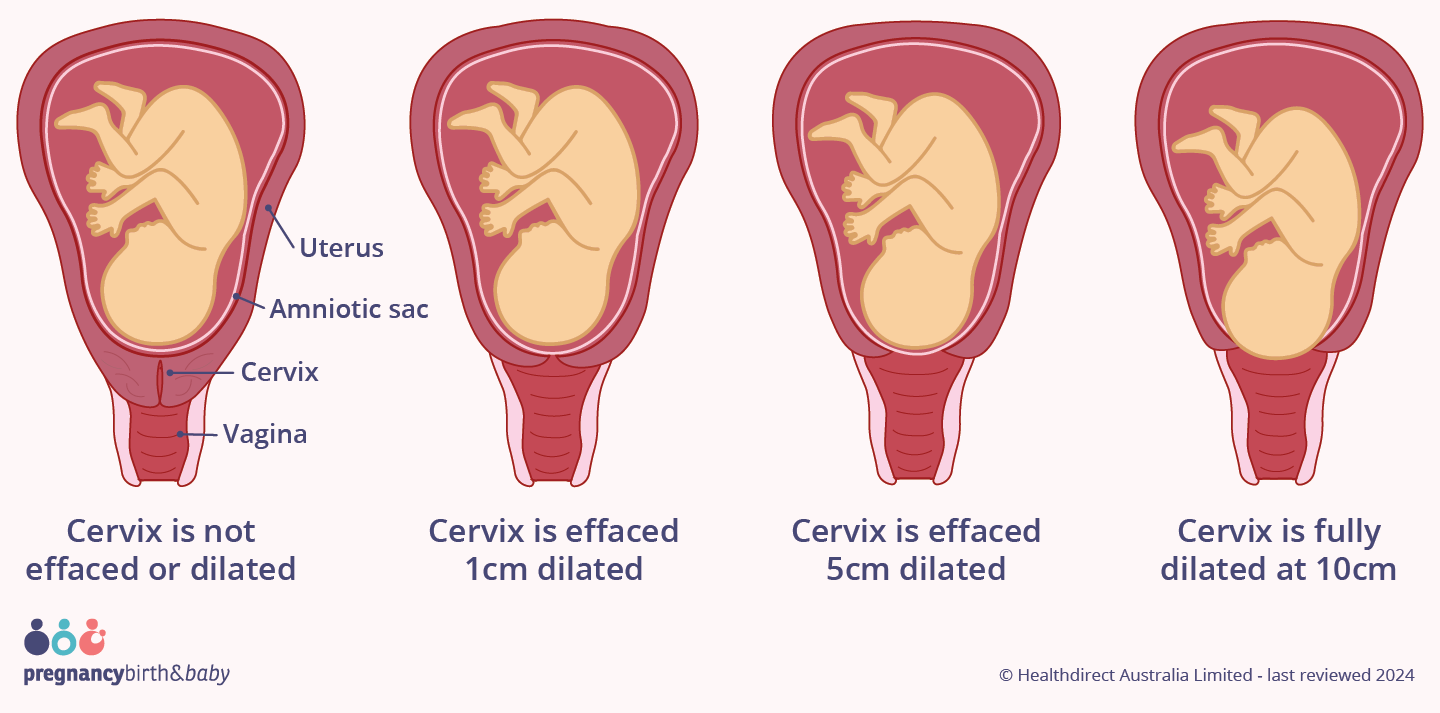
During labour your cervix changes from being long and firm to soft, thin and more elastic. It also starts to dilate (open). This is called 'effacement' or 'ripening'.
Changes to your cervix are partly triggered by contractions of your uterus. As your cervix begins to open, you may see a clear, pink, slightly bloody discharge or spotting (sometimes referred to as the 'show'). You may also notice the release of the mucus plug from your cervical canal.
The time it takes for your cervix to open (or dilate) during the first stage of labour will vary between people. You enter the second stage of labour when your cervix is fully open, about 10cm (known as 'fully dilated'). During this stage your baby moves through your pelvis and you push your baby out. The third stage of labour is when you deliver your placenta.
Doctors sometimes recommend that labour is induced (started with medical treatment).
Treatment can be given to artificially ripen your cervix, to start your labour. This can be done in several ways.

Call Pregnancy, Birth and Baby to speak to a maternal child health nurse on 1800 882 436 (Opens in new tab) or video call. Available 7am to midnight (AET), 7 days a week.
Find out how we develop and review our content.
Last reviewed: November 2024