Speak to a maternal child health nurse
Call Pregnancy, Birth and Baby to speak to a maternal child health nurse on 1800 882 436 (Opens in new tab) or video call. Available 7am to midnight (AET), 7 days a week.

The first stage of labour is when your cervix (the neck of your uterus) opens (dilates) in preparation for birth. During this stage, your contractions become stronger, longer and more frequent as your body helps your baby move down through the birth canal.
The first stage ends when your cervix is fully open at 10 centimetres — this means you are ready to begin pushing in the second stage of labour.
While every labour is different, the first stage of labour is divided into 2 distinct phases — the latent phase and the active phase. Most people in labour and midwives recognise the 'transition phase' as the end of the active phase, just before the second stage of labour begins.
The first phase is called the latent phase, and can last for many hours or even days.
Your cervix moves forward, shortens and becomes thinner (effaced) and begins to open. Contractions may be regular or irregular.
You can usually stay at home during this stage of labour.
Tips for this phase:
The second phase is called the active phase.
The transition phase is a period between the first stage of labour and the time when active pushing begins. In the transitional phase your cervix will be around 8 to 10 centimetres dilated.
You may feel:
During this time, your partner, midwife or doctor can help by offering calm reassurance, encouragement and staying close to support you through this intense phase of labour.
Once your cervix is fully dilated, the second stage of labour begins.
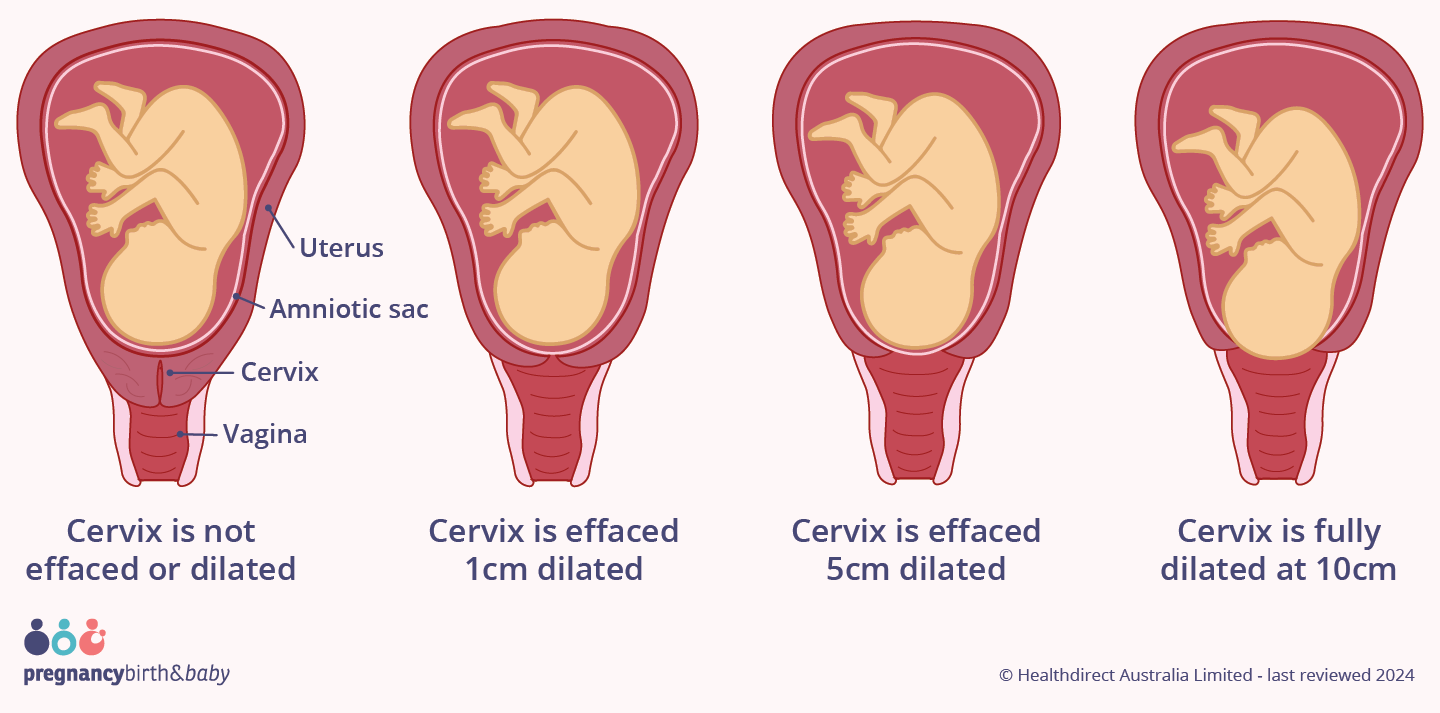
The first stage of labour is the longest, but its length can vary widely between births. It usually lasts longer for your first birth, and shorter if you have given birth before.
Some people do not notice contractions at the start, only realising they are in labour towards the end of the first stage — this is not common.
You can usually stay at home while you are in the latent or early stages of labour. This applies whether you are planning to birth in a hospital, with a private midwife, in a birth centre, on Country, or in a rural or remote setting.
You can contact your midwife or doctor at any time if you are unsure, need support, or want advice about when to travel to your chosen place of birth.
If you have had a normal and uncomplicated pregnancy, you should contact the birth unit at your hospital or birthing centre when your contractions are stronger and regular (around 3 to 4 minutes apart) or you can no longer manage at home.
At this stage, your cervix will likely be dilated to between 4 and 6 centimetres, and you will be in the active phase of the first stage of labour.
You should also call your planned place of birth if:
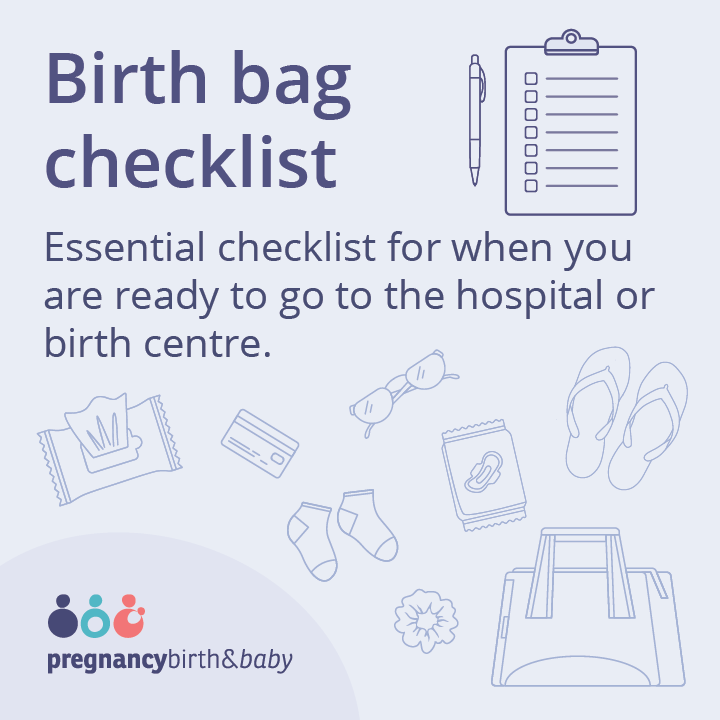
Use this checklist for what to take to the hospital or birthing centre.
If your labour is progressing quickly, Birthing on Country, or with a private midwife, contact your midwife, local health service or 000 for advice and support about where and how to safely continue your birth.
If you live in a rural or remote location, or plan to birth on country, be sure to discuss what to do when contractions start with your pregnancy care provider ahead of time.
During the first stage of labour your birth partner, family, friends and care team can help you feel supported and comfortable.
At home or in your birth setting, they can help you by:
Tips to help yourself during this stage include:
Once you are at the hospital, birthing centre or where you choose to give birth, your midwife will monitor you and make sure your labour is progressing as it should.
When you arrive at the hospital or birthing centre, these things may happen:
It can be helpful to prepare a folder with your important medical information for your midwife.
You can share your birth preferences with your birth team, and discuss your options for pain relief during labour. You can request pain relief at any time, and your midwife will guide you on suitable methods of pain relief for each stage of labour.
Every labour is different. Sometimes things don't go as planned and you may have to adjust your birth preferences if the situation changes. Your care team may recommend extra monitoring or medical support for possible labour complications such as:
If this happens, your midwife or doctor will explain what's happening, discuss your options, and involve you in decision-making. The goal is always to keep you and your baby healthy and safe.
You can prepare for labour in many ways to feel more confident and informed:
If you'd like more information or support, these organisations and services can help:
You can also call the healthdirect helpline on 1800 022 222 (known as NURSE-ON-CALL in Victoria). A registered nurse is available to speak with you 24 hours a day, 7 days a week.

Call Pregnancy, Birth and Baby to speak to a maternal child health nurse on 1800 882 436 (Opens in new tab) or video call. Available 7am to midnight (AET), 7 days a week.
Find out how we develop and review our content.
Last reviewed: November 2025