
Mouth ulcers | Better Health Channel
In most cases, mouth ulcers are harmless and resolve by themselves in a few days.


Mouth ulcers are a type of sore. They can develop on your baby's mouth, lips, tongue and gums.
Mouth ulcers are also known as canker sores or aphthous ulcers.
Mouth ulcers are common in children. Different types of ulcers may look different, depending on what is causing them.
Most mouth ulcers get better on their own within 2 weeks. If an ulcer does not heal after 2 weeks, it is called a chronic ulcer.
Your baby's symptoms depend on what is causing their mouth ulcers. These may include:
If your baby's ulcer is caused by a virus, they may develop a fever or a rash on their skin.
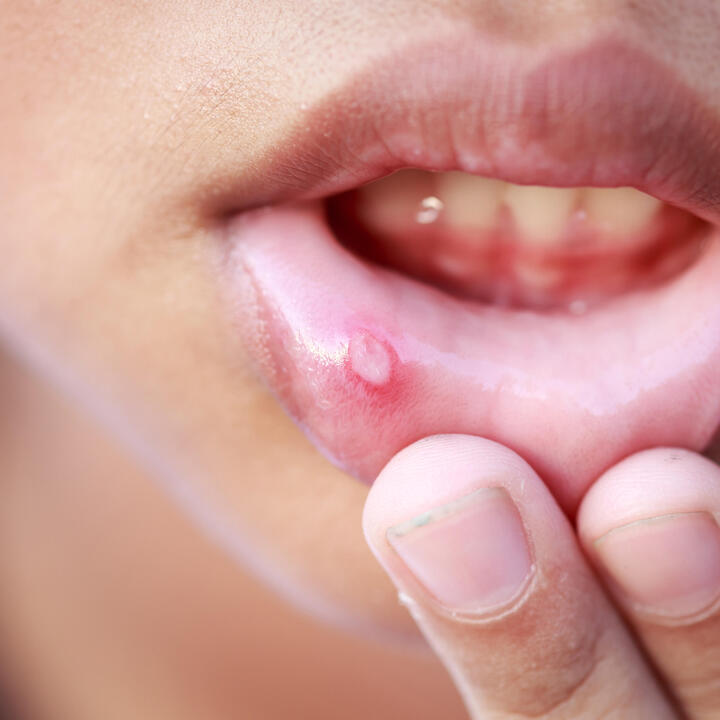
Mouth ulcers look like a shallow sore with a white/grey top and a red rim.
Read about how to tell if your child is sick.
There are many reasons why your baby might develop a mouth ulcer. These can include:
You should take your baby to their doctor if:
Your baby's doctor can diagnose a mouth ulcer by examining their mouth and asking you about their symptoms and medical history. Sometimes the doctor may take a swab of your baby's ulcer to send to the laboratory.
Treatment for your baby's ulcer includes treating the cause of their ulcer and their symptoms.
Treatment includes:
Try to encourage your baby to drink more fluids. If your baby is less than 6 months old, speak with your baby's doctor about how to safely feed them fluids. Depending on their age, you may be able to offer them jelly, icy poles, oral rehydration solutions, water or milk.
Your baby's doctor or pharmacist can explain which medicine is best for them and how to give it to your baby safely.
Complications from mouth ulcers are rare and can include:
If your baby has herpes simplex virus or hand, foot and mouth disease, they can develop very rare heart or neurological (nerve and brain) complications such as meningitis (Opens in new tab) and encephalitis (Opens in new tab).
If your baby has mouth ulcers from a virus like herpes simplex and can't control their saliva (dribbling), they should stay home from child care until they have recovered. This is to prevent spreading the virus to other children.

Learn more about school exclusion periods.
The Government of Western Australia, Child and Adolescent Health Service has a directory of Aboriginal child health resources (Opens in new tab) for Aboriginal and/or Torres Strait Islander people.
The NSW Government Multicultural Health Communication Service has translated the hand, foot and mouth disease (Opens in new tab) resource into many community languages.
Find out how we develop and review our content.
Last reviewed: May 2025




