Skip to content
Pregnancy, Birth and Baby homeAustralian Government, Department of Health, Disability and Ageing (Opens in new tab)
Pregnancy, Birth and Baby home
Need to talk? Call 1800 882 436.
It's a free call with a maternal child health nurse. *call charges may apply from your mobile.
Is it an emergency? Dial 000
If you need urgent medical help, call triple zero immediately.
  1. Home/
  2. Babies/
  3. Your baby's health and wellbeing/
  4. Breathing difficulties in babies

Breathing difficulties in babies

If your baby is finding it hard to breathe, take them to the nearest hospital emergency department or call triple zero (000) for an ambulance.

Key facts

  • Babies normally breathe faster than older children.
  • Your baby may have breathing difficulties if they are breathing faster than normal, their breathing is irregular, or they make sounds when breathing in and out.
  • Your baby's treatment will depend on the cause of their breathing difficulties.
  • There are many causes of breathing difficulties in babies, such as asthma and allergies, infections, and exposure to smoke and pollution.
  • Vaccination and good hygiene can help prevent some infections.
  • On this page

    • What is normal breathing in babies?
    • What are the signs my baby is having difficulty breathing?
    • When should I call an ambulance or go to the emergency department?
    • What causes breathing difficulties?
    • How is the cause of breathing difficulties diagnosed?
    • How are breathing difficulties treated?
    • What are the complications of breathing difficulties?
    • Can breathing difficulties be prevented?
    • Questions to ask your doctor
    • Resources and support

    What is normal breathing in babies?

    Babies normally breathe faster than older children. Your baby may need to work harder to breathe if they are unwell.

    The table below shows how fast your healthy baby should breathe.

    Normal breathing rate in babies
    Age Breaths per minute
    Newborn 25 – 60
    3 months 25 – 60
    6 months 20 – 55
    1 year 20 - 45

    It's normal for newborn babies to pause for a few seconds when breathing. They may also breathe quickly for a short time.

    By 6 weeks of age, your baby should have a more regular breathing pattern.

    What are the signs my baby is having difficulty breathing?

    Your baby may be having difficulty breathing if:

    • they are breathing faster than normal
    • their breathing is irregular
    • their nostrils flare (get wider) when they breathe
    • the skin under their ribs or neck sucks in with each breath
    • they are irritable

    You may also hear:

    • a wheeze or grunting sound when they breathe out
    • a high-pitch sound when they breathe in (stridor)

    They may also have:

    • fever — a temperature of 38°C or higher
    • difficulty drinking
    • difficulty eating
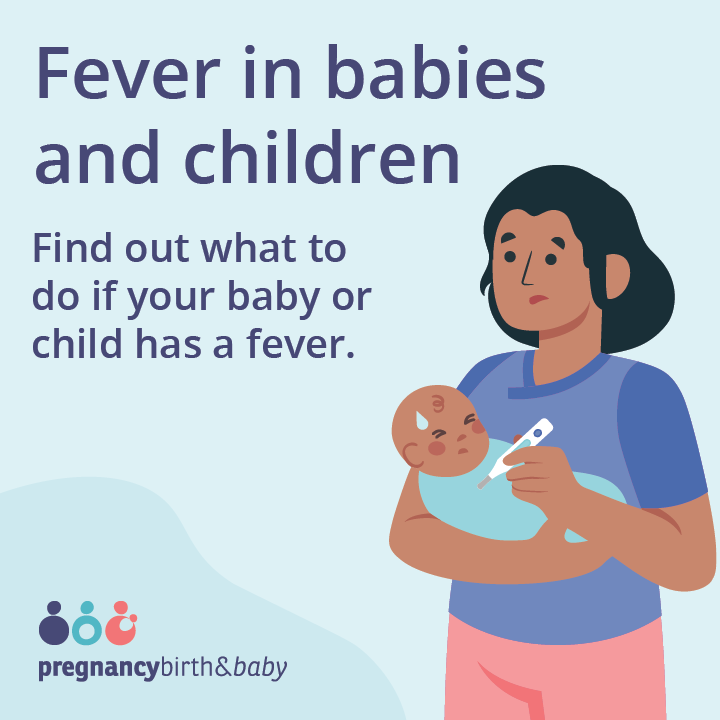
    What to do if your baby has a fever

    Handy guide to what to do if your baby has a fever.

    CHECK YOUR SYMPTOMS — Use the Symptom Checker and find out if you need to seek medical help.

    When should I call an ambulance or go to the emergency department?

    If your baby is finding it hard to breathe, take them to the nearest hospital emergency department or call triple zero (000) for an ambulance.

    Take your baby to the nearest hospital emergency department or call an ambulance if they:

    • have difficulty breathing
    • can't feed normally because of coughing or wheezing
    • have blue lips
    • are pale, sweaty and drowsy
    • is working hard to breath — you can see their skin going in between their ribs or at their neck
    • cannot swallow and are drooling

    Call your doctor today if your baby:

    • has stridor (a harsh noise when breathing in) when they are upset
    • seems dehydrated
    • has a fever of 38°C or higher for more than 2 days

    Also see your doctor if your baby's breathing symptoms are getting worse or you are worried.

    If your baby is sick but does not need immediate medical attention, consider calling:

    • your doctor
    • a pharmacist
    • Healthdirect Australia (Opens in new tab) — 1800 022 222

    What should I do while waiting for the ambulance?

    After calling an ambulance, stay on the line.

    The person taking your call may give you instructions while you wait for the ambulance.

    FIND A HEALTH SERVICE — The Service Finder can help you find doctors, pharmacies, hospitals and other health services.

    What causes breathing difficulties?

    There are many causes of breathing difficulties in babies, such as:

    • asthma and allergies
    • bacterial infections (Opens in new tab)
    • viral infections — bronchiolitis (Opens in new tab), croup, RSV and pneumonia (Opens in new tab)
    • passive smoking — exposure to vape or cigarette smoke
    • exposure to pollution, such as bushfire smoke
    • an inhaled foreign object, such as food or a small toy
    • genetic conditions, such as cystic fibrosis

    How is the cause of breathing difficulties diagnosed?

    Your doctor will ask you about your baby's symptoms and will examine them.

    Depending on the cause of your baby's breathing problems, your doctor may arrange other tests such as:

    • allergy tests
    • nose swabs
    • throat swabs

    Are there risk factors that may make it more likely that my baby will have breathing difficulties?

    Your baby is more likely to have breathing difficulties if they:

    • were born prematurely
    • are less than 10 weeks old
    • have a genetic condition, such as Down syndrome
    • have a chronic disease — chronic lung disease (Opens in new tab), congenital heart disease, chronic neurological conditions
    • have a weak immune system
    • are an Aboriginal and/or Torres Strait Islander person

    How are breathing difficulties treated?

    Your baby's treatment will depend on the cause of their breathing difficulties.

    Most infections will get better by themselves. However, there are things you can do straight away to help your baby feel better.

    Self-care at home

    Your sick baby needs cuddles and reassurance. Try to keep them comfortable and let them get plenty of rest.

    Offer breastfeeds or formula more often. This will make sure they do not become dehydrated.

    Do not let anyone smoke or vape around your baby. This is especially important for babies with breathing difficulties.

    Medicines for breathing difficulties

    Depending on the cause of your baby's breathing difficulties you may be advised to try some medicines.

    If your baby has a blocked nose, you can try using saline nose drops. This can help your baby feed more comfortably.

    If your baby has a high temperature, you can give them paracetamol or ibuprofen. Always read the instructions on the pack carefully. It's important to make sure that you give your baby the right amount of medicine. The amount your baby needs depends on their weight and the product you buy.

    There is evidence that cough medicines do not work.

    If your baby has asthma, they may be prescribed a reliever and preventer medicine.

    Most infections in babies are caused by viruses and so antibiotics aren't needed. Antibiotics help with infections caused by bacteria.

    Other treatment options

    Sometimes babies with breathing difficulties need to be admitted to (stay in) hospital. If this happens, your baby may be:

    • observed (watched by the nurses)
    • given extra oxygen
    • given extra fluids

    What are the complications of breathing difficulties?

    Complications from breathing difficulties depend on what is causing them. Your baby may be referred to a respiratory paediatrician (lung specialist for children).

    In severe cases of breathing difficulties, there is a risk of encephalopathy (brain damage) and death.

    Can breathing difficulties be prevented?

    Some causes of breathing difficulties can be prevented.

    Vaccination can prevent some infections such as:

    • influenza
    • pertussis (whooping cough)
    • RSV

    Research shows that getting the RSV vaccine during pregnancy lowers the chance of your baby getting severe RSV disease.

    Learn more about immunisations and vaccinations for your baby.

    Vaccinations available under the National Immunisation Program.
    Vaccinations available under the National Immunisation Program.

    It's not always easy to avoid catching infections, but good hygiene can help to stop their spread.

    • Make sure all family members wash their hands regularly.
    • Use clean tissues to remove mucus from your baby. Put the used tissue in the bin and wash your hands straight away.
    • Avoid sharing glasses and utensils with people who are sick.

    If your baby has asthma, try to:

    • avoid their triggers
    • keep hay fever under control
    • manage their eczema

    Keep your sick baby away from people with weak immune systems while they have symptoms.

    Questions to ask your doctor

    Questions to ask your doctor

    • Ask your doctor to explain anything you don't understand.
    • If your baby goes to childcare, ask your doctor whether you should keep them at home.
    • Learn more about when to keep your baby home from childcare.
    • If your baby has asthma, ask your doctor for an asthma action plan (Opens in new tab).

    Resources and support

    Talk to your doctor or child health nurse if you are worried about your baby's breathing.

    You can learn more about asthma (Opens in new tab) and croup (Opens in new tab) in English and other languages on The Royal Children's Hospital Melbourne website.

    • Royal Children's Hospital — Acceptable ranges for physiological variables (Opens in new tab)
    • Royal Children's Hospital Melbourne — Bronchiolitis (Opens in new tab)
    • The Royal Children's Hospital Melbourne — Fact Sheets: Croup (Opens in new tab)
    • The Royal Children's Hospital Melbourne — Pneumonia (Opens in new tab)
    • The Royal Children's Hospital — Asthma (Opens in new tab)
    • Royal Children's Hospital — Respiratory syncytial virus (RSV) (Opens in new tab)
    • NSW Ambulance — Emergency Services (Opens in new tab)
    • Asthma + Lung UK — Seeing a doctor about your child's breathing (Opens in new tab)
    • NCIRS — Respiratory syncytial virus (RSV): Frequently asked questions (FAQs) (Opens in new tab)
    • RACGP — Common neonatal presentations to the primary care physician (Opens in new tab)
    • Royal Children’s Hospital — Influenza (Opens in new tab)

    Find out how we develop and review our content.


    Last reviewed: May 2025

    Need more information?

    These trusted information partners have more on this topic.

    Breathlessness - Lung Foundation Australia

    Feeling breathless is normal after exercise. But if you have a lung disease or lung cancer, it can make everyday life harder. However, there are simple ways
    Lung Foundation Australia logo
    Learn more on Lung Foundation Australia website

    Bronchiolitis factsheet

    Bronchiolitis is a common chest infection in babies under 12 months. It causes mucus buildup and breathing difficulties.
    Sydney Children's Hospitals Network logo
    Learn more on Sydney Children's Hospitals Network website

    Croup factsheet

    Croup is a common childhood illness that causes airway swelling, leading to difficulty breathing and a bark-like cough.
    Sydney Children's Hospitals Network logo
    Learn more on Sydney Children's Hospitals Network website

    Baby breathing monitors: FAQs | Raising Children Network

    Baby breathing monitors sound an alarm if a baby stops breathing. Health professionals can help you decide whether you need a baby breathing monitor.
     logo
    Learn more on website

    Motor neurone disease (MND) | Better Health Channel

    Motor neurone disease (MND) is also called amyotrophic lateral sclerosis (ALS) and Lou Gehrig's disease. MND is a rapidly progressing, neurological disease. Motor neurones are nerve cells that control the voluntary muscles of the trunk and limbs, and affect speech, swallowing and breathing. Damage to these nerves causes muscle weakness and wasting. People with MND become increasingly disabled, and may lose speech, have difficulty swallowing and eventually die from respiratory (breathing) failure.
    Better Health Channel logo
    Learn more on Better Health Channel website

    Calming techniques – breathing training

    Guide to a simple breathing technique that can help you remain calm during times of anxiety or stress.
    WA Health logo
    Learn more on WA Health website

    Conception and fertility difficulties

    For many people, the journey of planning a family is filled with the anticipation of conception, the excitement of pregnancy, and the joy of birth. However, this is not the case for everyone, including those who face challenges trying to conceive. In fact, 1 in 6 Australian families have difficulties conceiving, and approximately 1 in 25 babies are born following assisted reproduction.
    Gidget Foundation Australia logo
    Learn more on Gidget Foundation Australia website

    Kids Health Info : Word-finding difficulties

    Royal Children's Hospital logo
    Learn more on Royal Children's Hospital website

    Polyps | Better Health Channel

    Nasal polyps can sometimes interfere with breathing.
    Better Health Channel logo
    Learn more on Better Health Channel website

    Creutzfeldt-Jakob disease (CJD) | Better Health Channel

    Creutzfeldt-Jakob disease is characterised by physical deterioration of the brain, dementia and walking difficulties
    Better Health Channel logo
    Learn more on Better Health Channel website

    Search our site for

    • Coronavirus (COVID-19)
    • Asthma
    • Bushfires

    Find a health service

    Search now

    Need further advice or guidance from our maternal child health nurses?
    1800 882 436 Video call
    Logo for Pregnancy, Birth and Baby

    Pregnancy, Birth and Baby is funded by the Australian Government and operated by Healthdirect Australia.

    About

    About Pregnancy, Birth and BabyAbout our contentInformation partnersOur privacy commitmentTerms of useHow we use AIPromotional material

    Explore

    A to Z topicsDue date calculatorFind local health servicesGlossary of pregnancy and labourPregnancy and parenting in picturesPregnancy and baby appsSymptom Checker (Opens in new tab)

    Connect

    Contact usVideo callNewslettersLinking to us (Opens in new tab)Consumer engagement (Opens in new tab)

    Follow

    Australian Government, Department of Health, Disability and AgeingLogo for healthdirect Australia

    Pregnancy, Birth and Baby’s information and advice are developed and managed within a rigorous clinical governance framework (Opens in new tab).

    This site is protected by reCAPTCHA and the Google Privay Policy (Opens in new tab) and Terms of Service (Opens in new tab) apply.

    Healthdirect Australia acknowledges the Traditional Owners of Country throughout Australia and their continuing connection to land, sea and community. We pay our respects to the Traditional Owners and to Elders both past and present.

    © 2026 Healthdirect Australia Limited

    This information is for your general information and use only and is not intended to be used as medical advice and should not be used to diagnose, treat, cure or prevent any medical condition, nor should it be used for therapeutic purposes.
    The information is not a substitute for independent professional advice and should not be used as an alternative to professional health care. If you have a particular medical problem, please consult a healthcare professional.
    Except as permitted under the Copyright Act 1968, this publication or any part of it may not be reproduced, altered, adapted, stored and/or distributed in any form or by any means without the prior written permission of Healthdirect Australia.