Skip to content
Pregnancy, Birth and Baby homeAustralian Government, Department of Health, Disability and Ageing (Opens in new tab)
Pregnancy, Birth and Baby home
Need to talk? Call 1800 882 436.
It's a free call with a maternal child health nurse. *call charges may apply from your mobile.
Is it an emergency? Dial 000
If you need urgent medical help, call triple zero immediately.
  1. Home/
  2. Pregnancy/
  3. Guide to a healthy pregnancy/
  4. Alcohol, pregnancy and breastfeeding

Alcohol, pregnancy and breastfeeding

Key facts

  • It's best not to drink alcohol when you are planning to become pregnant, are pregnant or breastfeeding.
  • If you are pregnant and drink alcohol, it passes from your blood through the placenta to your unborn baby.
  • Alcohol can harm your unborn baby.
  • If you are breastfeeding and drink alcohol, it passes into your milk.
  • In social situations, try swapping to a non-alcoholic drink.
  • On this page

    • Is it safe to drink alcohol if I'm pregnant?
    • What effects does alcohol have on my unborn baby?
    • What should I do if I drank alcohol before knowing I was pregnant?
    • What if I’m planning to become pregnant?
    • What if I’m breastfeeding?
    • How can I avoid alcohol during my pregnancy?
    • Resources and support

    Is it safe to drink alcohol if I'm pregnant?

    When you are pregnant no amount of alcohol is safe for your unborn baby.

    Australia has guidelines (Opens in new tab) to help reduce the health problems caused by drinking alcohol. There is advice for people who are pregnant, planning a pregnancy, and breastfeeding.

    In Australia, drinking alcohol is very common. It is often linked to social and cultural events. Knowing about the guidelines can help you to decide how much alcohol you want to drink.

    The guidelines say that pregnant women should try not to drink alcohol at all. This is to stop your unborn baby being harmed.

    When you drink alcohol, so does your unborn baby. Alcohol passes from your blood through the placenta and to your unborn baby. The placenta can't stop the alcohol from reaching your baby.

    When you're pregnant, there is:

    • no safe time to drink
    • no safe amount to drink
    • no safe type of alcohol to drink

    Alcohol can harm your baby at any point during your pregnancy. The more that you drink the more unsafe it is for your baby.

    The Australian Alcohol Guidelines advise that pregnant women should not drink alcohol. If you are breastfeeding, not drinking alcohol is safest for your baby.

    What effects does alcohol have on my unborn baby?

    Drinking alcohol while pregnant can increase your chance of:

    • miscarriage
    • stillbirth
    • premature birth
    • having a child with fetal alcohol spectrum disorder (FASD)

    FASD is a group of conditions that are caused by drinking alcohol during pregnancy.

    The effects of FASD are life-long. People with FASD often need support with:

    • motor skills
    • physical health
    • learning and attention
    • memory
    • communication
    • emotional regulations
    • social skills

    What should I do if I drank alcohol before knowing I was pregnant?

    You might have drunk alcohol before you even knew you were pregnant. The risk from low level drinking before you knew you were pregnant is likely to be low.

    If you are concerned, speak to your doctor or midwife. You can also NOFASD Australia (Opens in new tab) on 1800 860 613 for confidential information or support.

    Once you know you are pregnant, it's safest to stop drinking.

    What if I’m planning to become pregnant?

    If you're planning to become pregnant, not drinking is the safest choice for both parents. There is still a lot we don't know about how alcohol affects sperm. Ideally, you will stop drinking 3 months before you start trying for a baby.

    What if I’m breastfeeding?

    If you're breastfeeding your baby, not drinking is the safest choice.

    When you drink, the alcohol moves from your blood into your breastmilk. It takes about 30 to 60 minutes for this to happen.

    A few factors affect how much alcohol gets into your breastmilk, including:

    • the alcohol you are drinking (strength and amount)
    • what you've eaten
    • how much you weigh
    • how quickly you are drinking

    It takes about 2 hours for the alcohol from one standard drink (Opens in new tab) to be completely cleared from your body.

    If you do choose to have an occasional drink, you can plan to protect your baby. You may wish to breastfeed your baby or express milk before having any alcohol to drink.

    The Australian Breastfeeding Association has a Feed Safe app to help you understand when your breastmilk is free of alcohol.

    How can I avoid alcohol during my pregnancy?

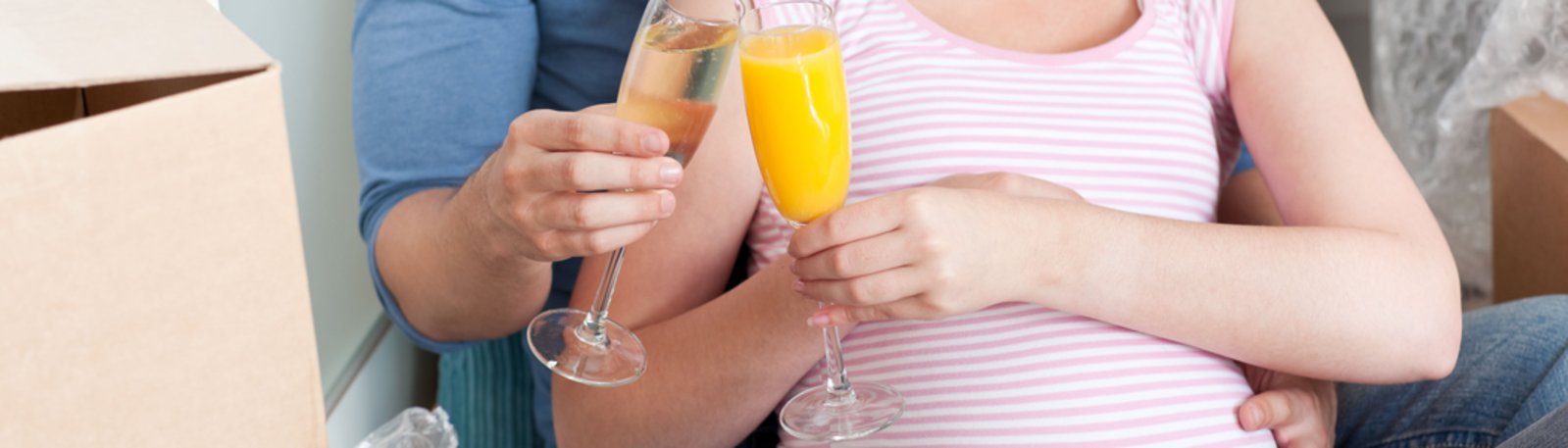
    It can be hard to avoid alcohol in social situations, particularly when others might not know you're pregnant. But you can ask for a non-alcoholic drink.

    If you don't want people to know that you are pregnant, you might also find it helpful to say:

    • "No thanks, I'm on a health kick and have given up alcohol."
    • "No thanks, I have to drive."
    • "No thanks, I have a big day tomorrow."

    If you're happy to tell people that you are pregnant you can just say:

    • "No thanks, not while I'm pregnant."

    Where can I get support to give up alcohol?

    If you're finding it hard to give up alcohol while you're pregnant or breastfeeding, talk to your doctor, midwife or obstetrician for advice.

    Try talking to your partner too. See if they will also stop or cut down on alcohol to support you.

    Resources and support

    For more information on giving up alcohol visit Hello Sunday Morning (Opens in new tab).

    Read more about alcohol during pregnancy and breastfeeding at Every Moment Matters (Opens in new tab).

    Visit the Australian Breastfeeding association (Opens in new tab) to download the Feed Safe app (Opens in new tab).

    Contact NOFASD Australia (Opens in new tab) on 1800 860 613 for confidential information or support on fetal alcohol spectrum disorder (FASD).

    Other languages

    You can find information about alcohol and pregnancy in languages other than English (Opens in new tab) at FASD HUB.

    Speak to a maternal child health nurse

    Call Pregnancy, Birth and Baby to speak to a maternal child health nurse on 1800 882 436 (Opens in new tab) or video call. Available 7am to midnight (AET), 7 days a week.

    • National Health and Medical Research Council — Australian guidelines to reduce health risks from drinking alcohol (Opens in new tab)
    • Australian Breastfeeding Association — Alcohol and breastfeeding (Opens in new tab)
    • Department of Health and Aged Care — Alcohol during pregnancy and breastfeeding (Opens in new tab)
    • FASD HUB Australia — What is Fetal Alcohol Spectrum Disorder (FASD)? (Opens in new tab)
    • BMJ Best Practice — Fetal alcohol spectrum disorder (Opens in new tab)
    • NewsGP - RACGP — Support for alcohol-free pregnancies (Opens in new tab)
    • NewsGP - RACGP — No safe level of alcohol consumption during pregnancy: Study (Opens in new tab)
    • Foundation for Alcohol Research and Education (FARE) — Planning a pregnancy (Opens in new tab)

    Find out how we develop and review our content.


    Last reviewed: July 2024
    Need more information?

    These trusted information partners have more on this topic.

    Alcohol | NHMRC

    Alcohol is the most widely used drug in Australia. People drink alcohol for a range of reasons and in different social and cultural contexts, but alcohol can cause harm to the person who drinks and sometimes to others around them. National Medical and Research Council (NHMRC) has guidelines to reduce health risks from drinking alcohol. The guidelines provide health professionals, policy makers and the Australian community with evidence-based advice on the health effects of drinking alcohol. They also help people make informed decisions about how much alcohol they drink, if any.
    NHMRC logo
    Learn more on NHMRC website

    Effects of Alcohol, Binge Drinking & Withdrawal Symptoms | Your Room

    Alcohol is a legal drug which has many short and long term side effects. Read about the effects of binge drinking, alcohol withdrawal symptoms and more.
    NSW Health logo
    Learn more on NSW Health website

    How much alcohol is safe to drink? | Australian Government Department of Health, Disability and Ageing

    Alcohol is never completely safe, it can cause harm to the person who drinks and sometimes to those around them. The Australian guidelines to reduce health risks from drinking alcohol provides evidence-based recommendations on how to keep risk of harm from alcohol low.
    Department of Health, Disability and Ageing logo
    Learn more on Department of Health, Disability and Ageing website

    Alcohol and breastfeeding | Australian Breastfeeding Association

    Guidance for breastfeeding mums on drinking alcohol safely, with practical tips and harm minimisation strategies.
    Australian Breastfeeding Association logo
    Learn more on Australian Breastfeeding Association website

    NHMRC Guidelines on Drinking Alcohol While Pregnant

    Australian Government NHMRC Guidelines strongly advise women who are pregnant or planning a pregnancy should not drink alcohol. Learn More
    NOFASD logo
    Learn more on NOFASD website

    Alcohol laws in Australia | Australian Government Department of Health, Disability and Ageing

    Alcohol laws help to reduce the harmful effects of alcohol on individuals, families and communities. Some laws, such as the legal drinking age, are the same across Australia. Other laws, such as where you can drink, are different in each state and territory.
    Department of Health, Disability and Ageing logo
    Learn more on Department of Health, Disability and Ageing website

    Alcohol | Australian Government Department of Health, Disability and Ageing

    Alcohol is a drug that affects your body – how you think, feel and behave. Drinking too much can affect your health and disrupt your life. Learn about guidelines to reduce your risk. Find help to reduce your own drinking or support someone close to you.
    Department of Health, Disability and Ageing logo
    Learn more on Department of Health, Disability and Ageing website

    How can you reduce or quit alcohol? | Australian Government Department of Health, Disability and Ageing

    It's a good idea to see your doctor first if you want to reduce or stop drinking alcohol. They can help you to manage any withdrawal symptoms you may have. It's also helpful to have an action plan and a support network to help you achieve your goals.
    Department of Health, Disability and Ageing logo
    Learn more on Department of Health, Disability and Ageing website

    What are the effects of alcohol? | Australian Government Department of Health, Disability and Ageing

    Alcohol affects everyone. How it affects you depends on how much you drink, your health, your age and other factors. Drinking too much can lead to harmful short-term and long-term effects. It can affect your physical and mental health, your job, your finances, your family and your community.
    Department of Health, Disability and Ageing logo
    Learn more on Department of Health, Disability and Ageing website

    Alcohol and energy drinks - HeartKids

    Information to help young people with childhood heart disease make informed choices about alcohol and energy drinks.
    HeartKids logo
    Learn more on HeartKids website

    Search our site for

    • Fetal Alcohol Spectrum Disorder

    Find a health service

    Search now

    Need further advice or guidance from our maternal child health nurses?
    1800 882 436 Video call
    Logo for Pregnancy, Birth and Baby

    Pregnancy, Birth and Baby is funded by the Australian Government and operated by Healthdirect Australia.

    About

    About Pregnancy, Birth and BabyAbout our contentInformation partnersOur privacy commitmentTerms of useHow we use AIPromotional material

    Explore

    A to Z topicsDue date calculatorFind local health servicesGlossary of pregnancy and labourPregnancy and parenting in picturesPregnancy and baby appsSymptom Checker (Opens in new tab)

    Connect

    Contact usVideo callNewslettersLinking to us (Opens in new tab)Consumer engagement (Opens in new tab)

    Follow

    Australian Government, Department of Health, Disability and AgeingLogo for healthdirect Australia

    Pregnancy, Birth and Baby’s information and advice are developed and managed within a rigorous clinical governance framework (Opens in new tab).

    This site is protected by reCAPTCHA and the Google Privay Policy (Opens in new tab) and Terms of Service (Opens in new tab) apply.

    Healthdirect Australia acknowledges the Traditional Owners of Country throughout Australia and their continuing connection to land, sea and community. We pay our respects to the Traditional Owners and to Elders both past and present.

    © 2026 Healthdirect Australia Limited

    This information is for your general information and use only and is not intended to be used as medical advice and should not be used to diagnose, treat, cure or prevent any medical condition, nor should it be used for therapeutic purposes.
    The information is not a substitute for independent professional advice and should not be used as an alternative to professional health care. If you have a particular medical problem, please consult a healthcare professional.
    Except as permitted under the Copyright Act 1968, this publication or any part of it may not be reproduced, altered, adapted, stored and/or distributed in any form or by any means without the prior written permission of Healthdirect Australia.