
Speak to a maternal child health nurse
Call Pregnancy, Birth and Baby to speak to a maternal child health nurse on 1800 882 436 (Opens in new tab) or video call. Available 7am to midnight (AET), 7 days a week.

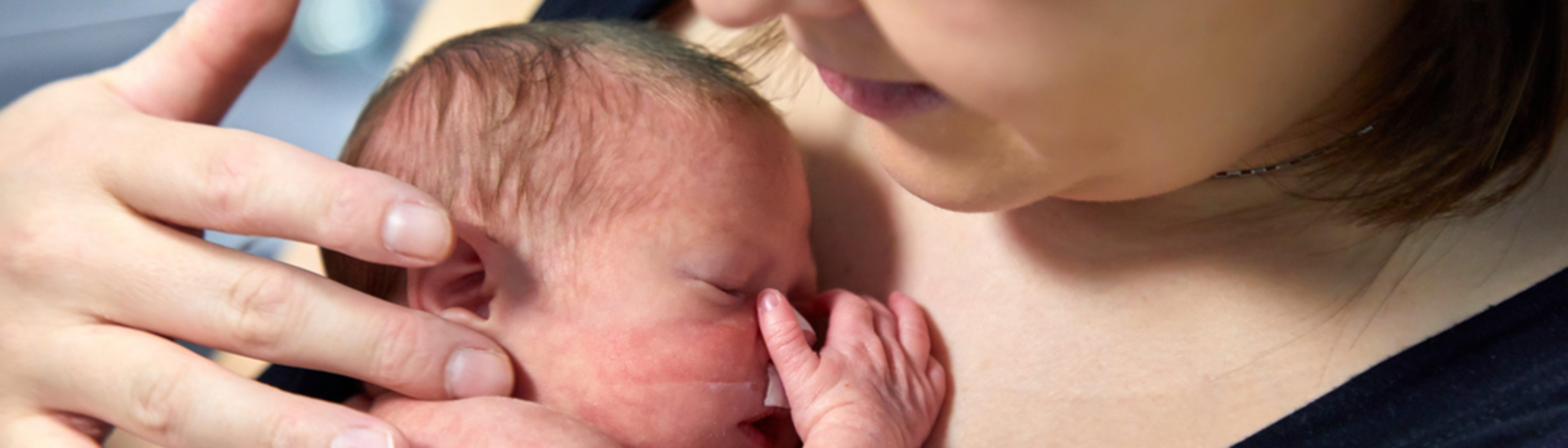
Kangaroo care is when you hold your baby to your bare chest. Your baby should be wearing just a nappy and maybe also a hat. This allows your baby to have skin-to-skin contact with you.
You can hold your baby upright with their head to one side. One hand should support your baby's head and the other is placed over their bottom. You can also hold them in a side lying position.
Once you are holding your baby skin-to-skin, your clothes or a blanket are wrapped around your baby in a kangaroo-like pouch. This helps to keep them warm.
During skin-to-skin care, you can use a mirror to see your baby's face.
Many maternity hospitals encourage skin-to-skin contact straight after birth if both the baby and mother are well.
Kangaroo care can be given to babies who are full term, either in hospital or at home. It can also be used in babies who are premature or unwell and being cared for in a neonatal intensive care unit (NICU) or special care nursery (SCN).
Even babies who need breathing support and are on a ventilator receiving oxygen can have kangaroo care. Ideally, kangaroo care happens within the first few days of birth.
Maternity care providers generally recommend that parents practise kangaroo care as soon and as frequently as possible. However, babies of any age benefit from kangaroo care.
Kangaroo care has a range of benefits. It can:
Kangaroo care may help reduce pain when babies have medical procedures. It can also reduce stress for the parents and baby during these procedures.
Skin-to-skin contact during vaccination can also reduce distress in babies aged up to one month.
Kangaroo care provides parents with many benefits, particularly in:
It's important that you are mindful and 'present' when you're providing kangaroo care.
Here are some practical tips for getting ready for kangaroo care, either in hospital or at home.
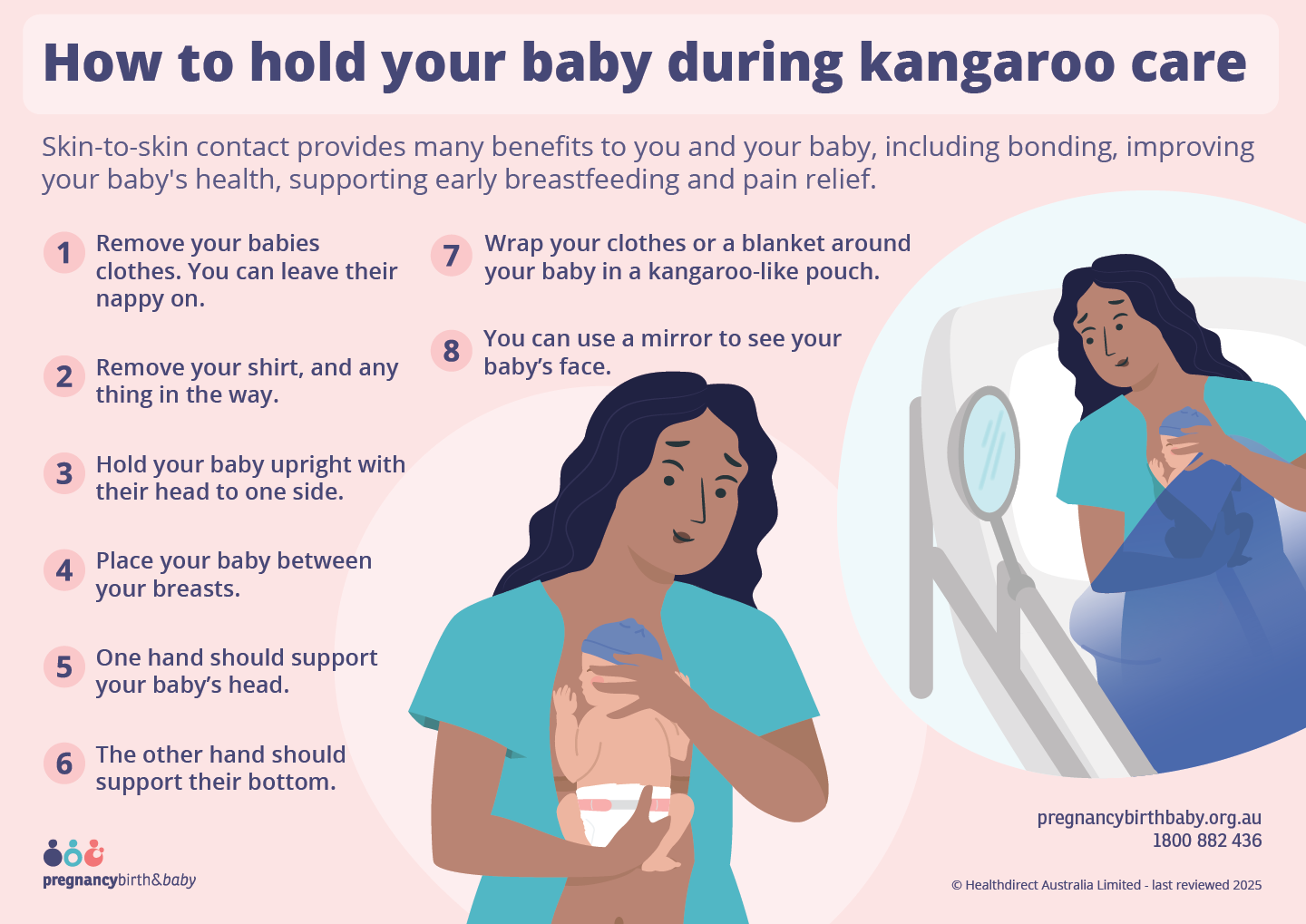
Click here to view how to hold your baby during kangaroo care.
Most maternity hospital staff are mindful of the benefits of kangaroo care and will do all they can to support you.
Planning kangaroo care around your baby's other care needs and feeding times will help you both to get the most out of this special time of connection.
It won't be the right time for kangaroo care if they need to stay in their humidicrib so they can be more carefully monitored.
Sometimes the nursery will be busy and perhaps the staff aren't able to support you. It will help to let them know that you're keen to hold your baby as often as possible.
Choose a time when you'll both get the most benefit:
Miracle Babies Foundation (Opens in new tab) supports premature and sick newborns and their families — call the NutureLine helpline on 1300 622 243 for 24-hour family support.
The Australian Breastfeeding Association (Opens in new tab) has information on breastfeeding and baby care — call the Breastfeeding Helpline on 1800 686 268 (1800 mum 2 mum).

Call Pregnancy, Birth and Baby to speak to a maternal child health nurse on 1800 882 436 (Opens in new tab) or video call. Available 7am to midnight (AET), 7 days a week.
Find out how we develop and review our content.
Last reviewed: October 2023





