
Speak to a maternal child health nurse
Call Pregnancy, Birth and Baby to speak to a maternal child health nurse on 1800 882 436 (Opens in new tab) or video call. Available 7am to midnight (AET), 7 days a week.


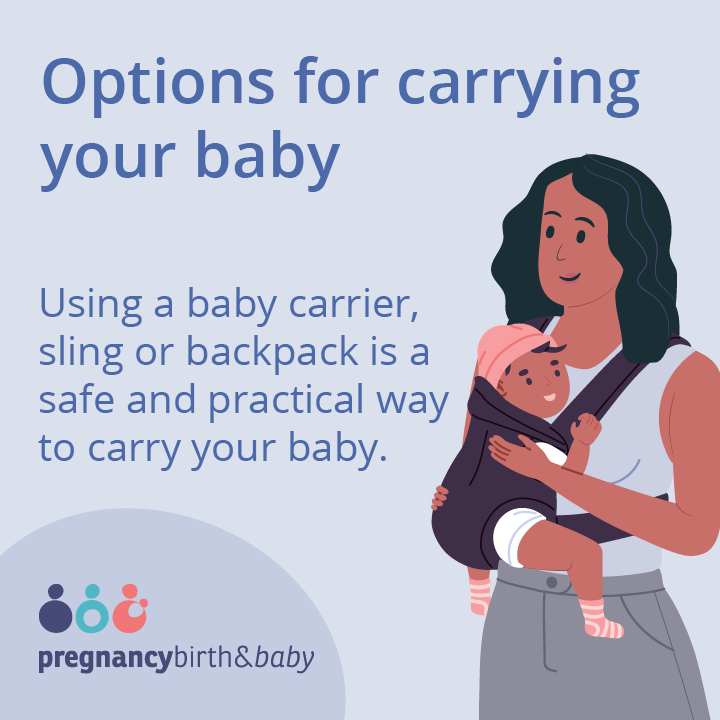
Most babies are carried in arms or pushed in prams and strollers. Other ways to carry your baby are using products such as:
Carrying your baby close using these products can be a wonderful way to bond with your baby, settle them or let them sleep on you, all while keeping your hands free for everyday tasks.
Carriers, slings and backpacks can help you move around more easily while keeping your baby safe and comforted. Babywearing (using a baby carrier) can also help with breastfeeding.
There are many ways to carry your baby, and each way has its own benefits. It's important to choose an option that is not only safe and comfortable, but also suits your baby's age, physical needs and your family's lifestyle.
Your cultural preferences, physical health and personal comfort all play a role in finding the best way to carry your baby.
For more information on how to carry your baby.
A baby carrier is a soft or structured item that you wear on your front, back or side. It has straps and buckles that help carry your baby safely.
Some carriers are made for newborns, while others are better for older babies who can sit up on their own. Some come with newborn inserts for extra support.
Carriers are useful for everyday use, around the home and to get out and about.
There are many baby carriers available from different companies. It is important to do your research and ask for recommendations from friends, family or other parents in your community.
A baby sling is a long piece of fabric worn over one shoulder and across your body. It makes a little pouch for your baby to rest in while carried.
Types of slings include:
It is important that you correctly position the sling so your baby can breathe safely.
When considering a baby sling, you should research different products and ask for recommendations from friends, family or other parents in your community.
A baby backpack is a firm, structured carrier that you wear on your back, like a hiking backpack.
Only use a framed carrier for babies who can hold their head and neck on their own — young babies are at risk of neck injuries. If you are unsure if a baby backpack is suitable for your baby, speak to a healthcare professional.
It is safe to use a carrier, sling or backpack to carry your baby, if it is used the right way. Some babies need extra care in a carrier, especially if they are at risk of sudden infant death syndrome (SIDS). Examples include if they:
If your baby is less than 4 months old, it's important to be extra careful and make sure they're in a safe position when you carry them.
Here are some tips to consider when choosing how to carry your baby:
If your baby has a health problem like reflux, hip problems or another medical condition, speak with your doctor before using a carrier, backpack or sling.
TICKS is a simple way to remember how to carry your baby safely:
Choosing a baby carrier, sling or backpack is a personal decision. What matters most is safety and comfort.
In Australia, there are no mandatory safety standards for baby carriers, slings or backpacks. There are Australian product safety standards (Opens in new tab) that manufacturers and parents can follow to help keep babies safe.
Here are some tips to consider when picking the best carrier for you and your baby:
For more information and support:
Red Nose Australia has resources on safe sleeping (Opens in new tab) for Aboriginal and/or Torres Strait Islander peoples. You can also book a yarning with a midwife on 1300 998 698.
Kidsafe has translated resources on how to keep children safe (Opens in new tab) including a brochure on baby slings and carriers, in a range of community languages.

Call Pregnancy, Birth and Baby to speak to a maternal child health nurse on 1800 882 436 (Opens in new tab) or video call. Available 7am to midnight (AET), 7 days a week.
Find out how we develop and review our content.
Last reviewed: May 2025


