
Speak to a maternal child health nurse
Call Pregnancy, Birth and Baby to speak to a maternal child health nurse on 1800 882 436 (Opens in new tab) or video call. Available 7am to midnight (AET), 7 days a week.

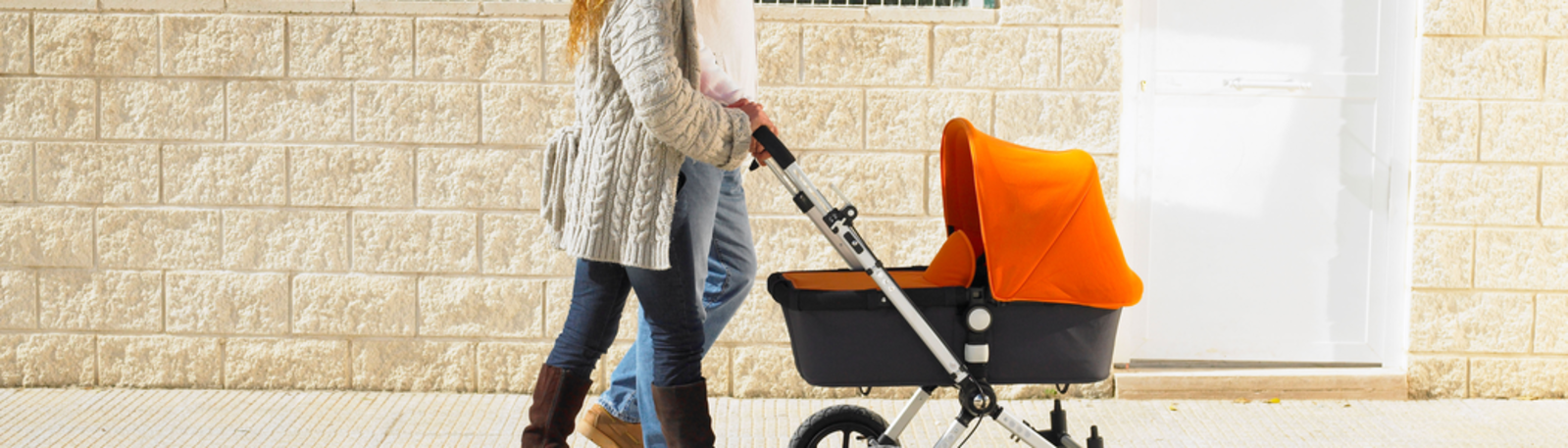
The terms 'pram' and 'stroller' are often used interchangeably. They are both wheeled vehicles used to carry a baby or a child. Most prams and stroller can carry a baby or child weighing up to 9kg.
Prams are designed for babies who are too young to sit unsupported. Prams usually keep babies in a fully reclined (lying flat) position.
Strollers are usually designed for older babies and toddlers who are able to sit upright. Strollers are often adjustable, so your child can also lie flat, or sit at an angle.
Children under 6 months old should only be placed in a stroller, if it reclines to at least 130°.
There are also combination prams and strollers. These allow different seat positions, including:
Prams and strollers come in a variety of other designs, such as:
Tricycles, which can be pedalled by your child and steered by you, are also available as strollers. These should not be used by children under 24 months old.
Prams and strollers should meet the Australian Product Safety Standard (Opens in new tab) to keep your baby safe. This is based on the Australian and New Zealand standard AS/NZS 2088:2000.
Safety is the most important thing to consider when choosing a pram or stroller. In Australia, there is a Product Safety Standard (Opens in new tab) for prams and strollers, which should have:
The pram or stroller should also have one or more brake options (parking devices). They should be:
There are other things you may want to think about when getting a pram or stroller.
Think about how comfortable the pram is for your child, as they will spend a lot of time in it.
You should choose a pram that is easy to push and steer.
You can also look at prams with different folding options. Some may be better for fitting your pram in your car, for example.
When choosing a pram, you may also want to consider sun protection. A canopy of mesh and Ultraviolet Protection Factor (UPF) of 50+ is ideal.
You may choose to buy a second-hand pram or use a hand-me-down. Second-hand strollers should also comply with Australian Safety Standards.
If you are considering a used or second-hand pram, make sure that:
You should also check that the pram has not been recalled. You can check for recalled baby and kid products (Opens in new tab) on the Product Safety Australia website (Opens in new tab).
Here are some tips for using a pram or stroller safely:
Not all strollers are suitable for activity, so if you're a runner make sure to find one specifically designed for running.
Never leave your baby unsupervised in a pram or stroller. They are not a substitute for a safe cot.
Avoid placing heavy bags on the pram or stroller handles. This can cause the pram to tip over, especially when you are lifting your child out. Place bags in the tray underneath the pram instead.
You should not cover the pram with a dry cloth to keep sun off your baby. On hot days, the temperature under a pram canopy can be up to 4 degrees hotter than outside. This can be dangerous for your child.
Waterproof plastic rain covers can also reduce airflow and increase humidity inside the pram.
Make sure you allow for adequate ventilation. If your pram does not have a canopy, you can cover it with a moist muslin cloth. You should check the cloth and re-wet it every 20 minutes.
For more information on prams and strollers, you can visit:

Call Pregnancy, Birth and Baby to speak to a maternal child health nurse on 1800 882 436 (Opens in new tab) or video call. Available 7am to midnight (AET), 7 days a week.
Find out how we develop and review our content.
Last reviewed: March 2024


