Speak to a maternal child health nurse
Call Pregnancy, Birth and Baby to speak to a maternal child health nurse on 1800 882 436 (Opens in new tab) or video call. Available 7am to midnight (AET), 7 days a week.

Nipple thrush is a fungal infection that you can get when you're breastfeeding.
Thrush is a common yeast infection. It can affect different parts of your body, such as your vagina or nipples, when you are breastfeeding.
If you’re breastfeeding, nipple thrush can affect your breasts or nipples, or your baby’s mouth or bottom.
Thrush is contagious. It can be easily passed from you to your baby. Or from your baby to you.
You might have an infection in your nipple if:
Pain is the most common symptom of nipple thrush. It may be present in one or both breasts. Often, the pain happens right after a feed and between feeds.
Nipple pain can also happen because of how your baby attaches to your breast. A small change in how your baby is positioned and attaches to your breast can make feeding easier. This can help you continue breastfeeding, which has benefits to you and your baby.
Speak with a lactation consultant, midwife or child health nurse for advice and support.
Learn more about how to position your baby for breast feeding.
If your baby latches well and you keep having nipple pain, you may have an infection.
Signs of a nipple infection include if your nipples:
Sometimes there may be no visible signs of an infection but you have:
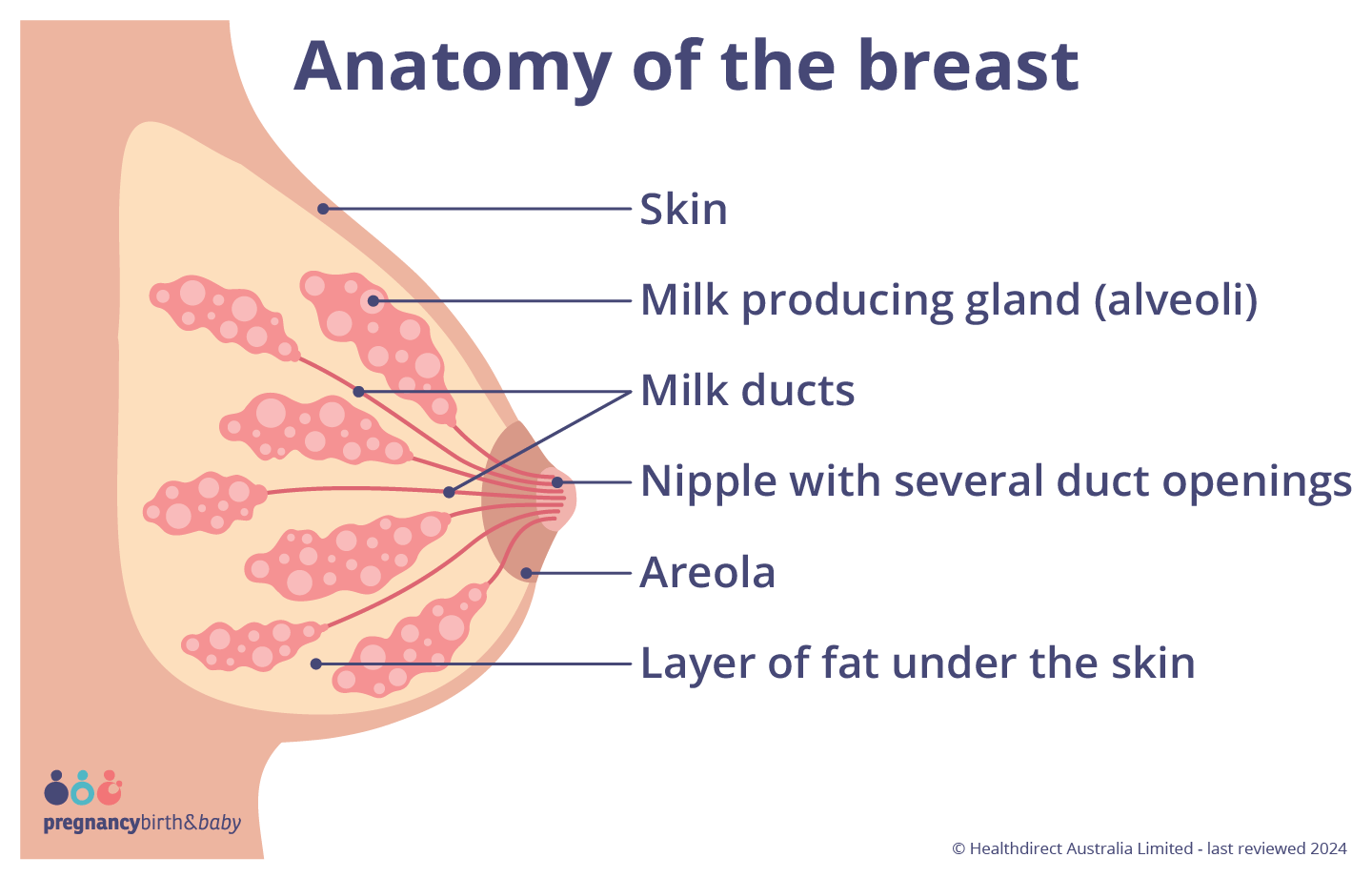
Anatomy of the breast.
There may be other reasons for nipple pain while you are breastfeeding, such as:
See your doctor or lactation consultant if you have nipple pain that doesn’t go away after changing your baby’s feeding position.
If you have nipple thrush, your baby may also have thrush. This is because thrush is very contagious.
Your baby may get thrush:
Oral thrush looks like:
Your baby may also be unsettled when you feed them if they have oral thrush.
Thrush on your baby’s bottom may appear as a bright red rash with spots around it. The rash only gets better with antifungal treatment (Opens in new tab).
If either you or your baby has thrush, both of you will need to be treated at the same time.
Nipple thrush is a fungal infection caused by the yeast Candida albicans. This can be linked to:
Leftover breast milk on your nipples and the inside of your baby’s mouth acts as food for the growing yeast.
You can also get thrush infections in other parts of your body.
See your doctor or lactation consultant if you have nipple pain that doesn’t go away despite making a change to your baby’s positioning when feeding.
Sore or cracked nipples that take a long time to heal are also a sign that you should see your doctor. This can be a sign of infection, and you might need medicine to treat it.
You should also see your doctor if you notice signs of thrush in your baby.
Your doctor will ask about your symptoms and may want to examine your breasts and your baby.
If you have been diagnosed with nipple thrush, both you and your baby will need to be treated. This will stop you from passing the infection back and forth when breastfeeding.
Antifungal treatment, in the form of a cream or gel, is the most common treatment for nipple thrush. You can put this cream or gel on your nipple after a feed.
Gently massage the cream or gel into your nipple and areola for a few minutes. You do not need to wash it off the nipple before the next breastfeed. Any extra cream can be carefully wiped off with a tissue. Your symptoms should improve within 2 to 3 days, but you and your baby may need treatment for a week or more.
If thrush does not clear up after using a cream or gel, your doctor may prescribe an oral (taken by mouth) antifungal for you.
Your symptoms should improve within 2 to 3 days. If your symptoms remain after completing the full course of oral antifungal medicine as directed by your doctor, you should see your doctor again.
Always tell your doctor that you are breastfeeding before they prescribe any medicines. You can also check with your pharmacist that medicines are safe to use while you're breastfeeding.
To stop the spread of thrush, always wash your hands after nappy changes.
Wash your towels, bras and cloth nursing pads in hot soapy water. Dry your washing outside in the sun if possible.
It’s safe to breastfeed while you have nipple thrush.
You can also feed your baby any recently expressed breastmilk while you are being treated for thrush. You don’t need to throw away any stored breastmilk if you have a nipple or breast infection.
There are some things you can do that may help you avoid getting nipple thrush.
Wash your hands well, especially after every nappy change.
Thrush thrives in moist, warm environments, so keep your nipples dry. Wash your bras in hot water and change your breast pads often.
Make sure that every family member uses a separate towel and wash the towels often.
Wash and sterilise anything that your baby puts in their mouth. This includes:
Some people find that taking a probiotic can help to control repeated thrush infections. Taking a probiotic may also be suggested if you are taking antibiotics. Speak to your doctor or pharmacist for more advice about probiotics, and if this is right for you.
There is little evidence to show that reducing the levels of sugar or yeast in your diet is effective at stopping thrush.
If not treated, the pain from nipple thrush can lead parents to stop breastfeeding earlier than they would like.
It’s important that both you and your baby are treated for thrush. Otherwise, the infection can continue to pass between you both.
If you need help or support with breastfeeding, talk to your doctor, midwife or lactation consultant. They will be able to watch your baby feeding and give you advice on attaching your baby for feeds.
You can also get breastfeeding support by calling the National Breastfeeding Helpline (Opens in new tab) on 1800 mum2mum (1800 686 268).
The Australian Breastfeeding Association (Opens in new tab) provides information and videos on positioning your baby to breastfeed.
You can read more about medicines that you can use while breastfeeding.

Call Pregnancy, Birth and Baby to speak to a maternal child health nurse on 1800 882 436 (Opens in new tab) or video call. Available 7am to midnight (AET), 7 days a week.
Find out how we develop and review our content.
Last reviewed: June 2026