Speak to a maternal child health nurse
Call Pregnancy, Birth and Baby to speak to a maternal child health nurse on 1800 882 436 (Opens in new tab) or video call. Available 7am to midnight (AET), 7 days a week.

Burns and scalds (Opens in new tab) are injuries to your skin caused by heat, electricity, chemicals (Opens in new tab) and radiation. Children can also be burnt by contact with very cold things. Many burns happen in the home and can be prevented.
Your child can be burnt when their skin touches a dry heat, such as:
Your child can be scalded when their skin touches wet heat, such as:
Scalds are more common in young children. Burns are more common in older children and teenagers. Whether your child has a burn or scald, their injury is generally called a burn.
Burns can affect your child's:
The severity of your child's burn can range from a minor injury (where you can treat them at home) to a severe or life-threatening injury (where you need to take them to hospital for treatment).
Burns can be grouped by:
The depth of your child's burn can be described as:
If your child has been burnt, their symptoms depend on how deep their burn is:
Your child may have a mix of different levels of burn in the one injury.
Superficial burns are usually more painful than full thickness burns. This is because full thickness burns may have caused nerve (Opens in new tab) damage and affect your child's ability to feel pain.
Other symptoms your child may have include:
You should call for an ambulance if:
All infants and children who have been burnt will need to be checked by a doctor.
If the burn is serious or your child is obviously unwell, call triple zero (000) (Opens in new tab) for an ambulance. The operator will tell you what to do until help arrives.
While you wait for an ambulance, make sure it is safe for you to approach your child and then you should begin the following first aid treatment:
Your aim is to:
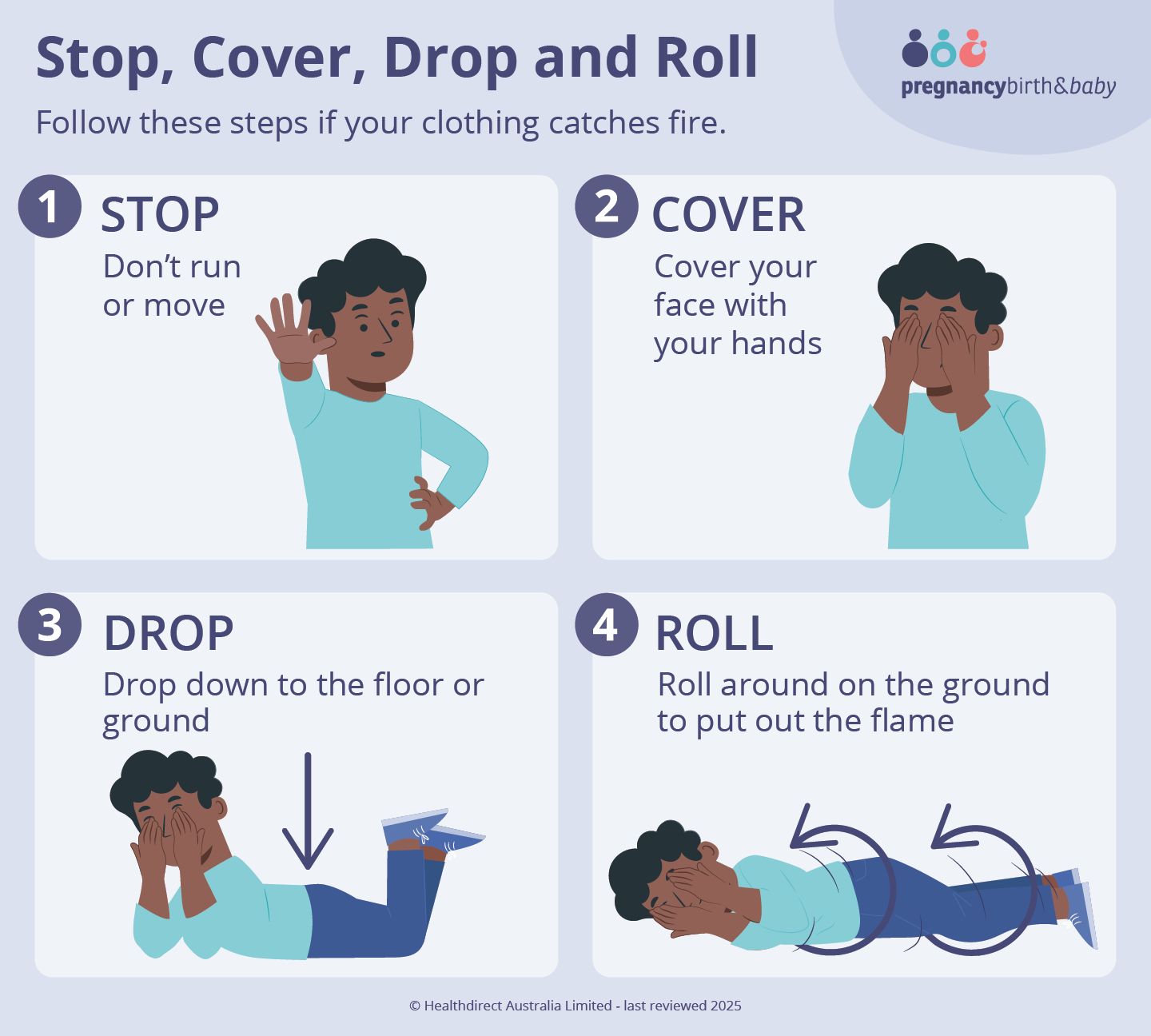
Stop, Cover, Drop and Roll - what to do if your clothing catches fire.
If you are worried your child has inhaled (breathed in) hot gases or smoke:
Do not assume your child is OK just because they look like they are breathing normally, are talking and get up on their own. Some gases can cause lung damage 24 hours after your child was exposed. See a doctor as soon as possible.
If your child has had a chemical burn, your aim is to dilute the chemical as quickly as possible. Here are some tips:
Do not apply cling wrap or hydrogel dressings on chemical burns
Do not use another chemical to try to neutralise an acid or base burn
Do not peel off clothing or anything stuck to the burn
Do not use ice or ice water to cool your child's burn
Do not pop any blisters
Do not put any lotions, ointments, creams or powders on their burn
Your child can be burnt or scalded by:
Many burns in young children happen at home.
If your child has been burnt, their doctor will diagnose how severe it is by:
Often, to complete their assessment, your child's clothes will need to be removed.
Depending on how deep and widespread your child's burn is, they may be treated at home or at the hospital. Treatment usually includes:
In serious cases, your child may need surgery. A team of healthcare professionals, including doctors, nurses (Opens in new tab), dietitians (Opens in new tab), physiotherapists (Opens in new tab) and occupational therapists (Opens in new tab) will work together to help your child. Your child's recovery and rehabilitation can take many months.
Read more about the treatment of burns and scalds in children.
The complications of burns and scalds depend on the type and severity of the injury. Some complications can happen straight away and others develop later, as your child is recovering.
Immediate life-threatening complications of serious burns include breathing difficulties (if your child has inhaled smoke or has burns on their chest) or shock.
Other complications your child can develop later on include:
Burns and scalds can happen around young children. Keeping a close watch on them helps reduce the risk. There are also practical steps you can take to help prevent these injuries.
When you are in the kitchen or have hot food and drinks, be sure to always supervise your child.
Tips for your kitchen:
Tips when eating:
Always supervise children in the bathroom — never leave them alone. If you need to leave the bathroom, take your child with you.
Many hot tap water scalds occur in the home. They are often caused by bathwater heated to unsafe temperatures.
When bathing or showering your child:
Here are some tips to help keep kids safe from burns in bedrooms:
In living spaces, be sure to:
You should also be sure to check that your smoke alarms are working and up to date.
If you are camping, make sure your children wear shoes. Keep them away from campfires and hot coals.
Make sure you:
Be sure to check the temperature of metal objects in hot weather so your child does not burn themselves, such as:

Call Pregnancy, Birth and Baby to speak to a maternal child health nurse on 1800 882 436 (Opens in new tab) or video call. Available 7am to midnight (AET), 7 days a week.
Find out how we develop and review our content.
Last reviewed: June 2025