Skip to content
Pregnancy, Birth and Baby homeAustralian Government, Department of Health, Disability and Ageing (Opens in new tab)
Pregnancy, Birth and Baby home
Need to talk? Call 1800 882 436.
It's a free call with a maternal child health nurse. *call charges may apply from your mobile.
Is it an emergency? Dial 000
If you need urgent medical help, call triple zero immediately.
  1. Home/
  2. Babies/
  3. Your baby's health and wellbeing/
  4. Vomiting in babies

Vomiting in babies

Key facts

  • Vomiting is when food or liquid forcibly comes out of your baby's stomach, through their mouth.
  • Vomiting is different to spitting up, which happens when your baby brings up milk for example, because they have reflux.
  • Vomiting may be a symptom of a health condition, so it's best to see your doctor if your baby vomits.
  • Seek urgent care if your baby's vomit is red, black or green, or if they have signs of being severely dehydrated or have a fever and are younger than 3 months of age.
  • If your baby is vomiting because they have an infection such as gastroenteritis ('gastro'), continue breastfeeding or formula feeding them. If they are older than 6 months, you can also feed them fluids.
  • On this page

    • What is vomiting?
    • What other symptoms can be related to vomiting?
    • What causes vomiting in babies?
    • How is the cause of vomiting in babies diagnosed?
    • When should I see my doctor?
    • How is vomiting in babies treated?
    • What are potential complications of vomiting in babies?
    • Can vomiting in babies be prevented?
    • Resources and support

    What is vomiting?

    Your baby vomits when food or liquid forcibly comes out your baby's stomach, through their mouth.

    Vomiting is a symptom of many different conditions.

    Vomit can look different, depending on the cause of your baby's vomiting. If your baby's vomit is red or black, it could mean that they have vomited blood. If your baby's vomit is green, it could mean they have vomited bile (juices your liver makes to digest fats) and have a bowel obstruction (Opens in new tab).

    It is important you know what to do when your baby vomits. It can be life-threatening.

    What is the difference between vomiting and spitting up?

    Vomiting is not the same as spitting-up. Spitting up or 'posseting' is also known as gastro-oesophageal reflux (GOR or 'reflux'). Spitting up is also different to a disease called GORD.

    Spitting up is common and normal for young babies, especially after a feed. It happens when small amounts of breastmilk or formula spill out of their mouth from their stomach. Many babies are not distressed when they have reflux and are 'happy chuckers'.

    What other symptoms can be related to vomiting?

    You should go to the nearest hospital emergency department immediately if you have a baby younger than 3 months old with a fever above 38°C. Read more on fever in babies.

    If your baby is vomiting, they may also have other symptoms, including:

    • diarrhoea
    • fever
    • rectal bleeding
    • painful or distended stomach
    • poor appetite
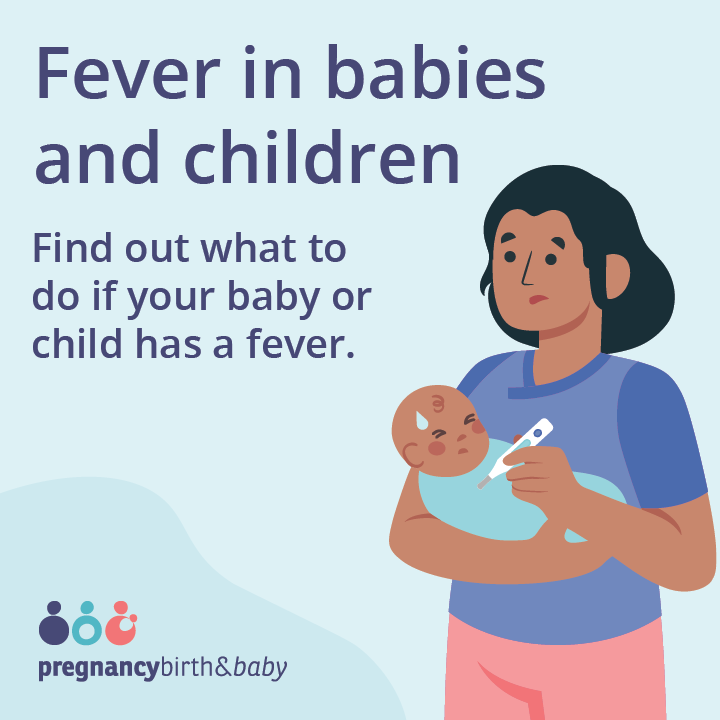
    Promotional tile for the infographic on Fever in babies and children.

    A handy guide on what to do if your baby has a fever.

    CHECK YOUR SYMPTOMS — Use the Symptom Checker and find out if you need to seek medical help.

    What causes vomiting in babies?

    The most common cause for your baby to vomit is an infection, such as gastroenteritis ('gastro'). Your baby can also vomit for other reasons, including:

    • bowel obstruction
    • increased intracranial pressure (Opens in new tab) (high pressure inside the skull)
    • pyloric stenosis (Opens in new tab) (a condition of the digestive system)
    • testicular torsion (Opens in new tab) (twisted testicle)
    • sepsis (a dangerous reaction to infection)
    • allergic reaction to food
    • food poisoning

    Your newborn baby may also vomit because of:

    • inborn errors of metabolism (Opens in new tab)
    • congenital adrenal hyperplasia (Opens in new tab)
    • oesophageal atresia or tracheo-oesophageal fistula (Opens in new tab)

    How is the cause of vomiting in babies diagnosed?

    Your baby's doctor can diagnose the cause of their vomiting by:

    • asking you about your baby's symptoms and medical history
    • doing a physical and neurological examination
    • ordering tests, including an x-ray (Opens in new tab) or ultrasound (Opens in new tab) of your baby's abdomen, lumbar puncture (Opens in new tab), blood tests (Opens in new tab), urine tests (Opens in new tab) and stool culture (Opens in new tab)

    Your baby's doctor will use their judgment to decide which tests are needed.

    Knowing why your baby is vomiting is important for them to get the treatment they need.

    When should I see my doctor?

    You should take your baby to see their doctor if they are vomiting and they:

    • have not yet passed their meconium
    • have diarrhoea
    • are projectile vomiting (vomiting with force)
    • cannot keep fluids down
    • are dehydrated (Opens in new tab) — have fewer wet nappies than usual, dark yellow or brown urine, dry lips and mouth
    • are younger than 6 months old

    Follow your intuition. If you are worried about your baby, take them to get checked.

    Knowing that your baby is healthy can give you peace of mind as a parent. Learn the signs that your baby is healthy and what to look out for it they are feeling unwell.

    To find a doctor or maternal, child and family health service near you, use the Pregnancy Birth and Baby Service Finder tool.

    FIND A HEALTH SERVICE — The Service Finder can help you find doctors, pharmacies, hospitals and other health services.

    When to seek urgent care

    You should seek urgent medical care if:

    • their vomit is green, red or black
    • they are younger than 3 months and have a fever above 38.0°C
    • their soft spot (fontanelle) on the top of their head has sunken — they may be severely dehydrated

    How is vomiting in babies treated?

    Your doctor will treat your baby's vomiting by considering their age, severity of their symptoms and what they think is causing their vomit.

    If your baby is vomiting because of a bowel obstruction, trachea-oesophageal fistula, oesophageal atresia, pyloric stenosis, testicular or ovarian torsion, they may need surgery.

    If your baby is severely dehydrated or cannot hold down fluids, they may need intravenous (IV) fluids in hospital.

    Self-care at home

    If your baby vomits, has no other symptoms and serious causes have been ruled out, they may not need specific treatment. Give them fluids. Monitor for signs of dehydration. Ask your early childhood nurse about the best way to give them fluids, and how much they need.

    If your baby has gastro, continue breastfeeding or formula feeding. You can feed them more often. Offer your baby fluids every time they vomit.

    If your baby has gastro and is older than 6 months, give them water or ask your pharmacist to recommend a specialised rehydration drink. You can give small amounts often. Depending on their age and if it is safe, you can give them fluids with a straw, spoon or syringe.

    Read about when babies can drink water.

    Medicines for vomiting in babies

    If your baby is more than 6 months old and is vomiting because they have gastro, your doctor may prescribe a medicine called ondansetron (Opens in new tab). It prevents nausea and vomiting.

    Other anti-vomiting medicines are not usually recommended because of potential side effects.

    Follow the instructions of your baby's doctor and pharmacist when giving them medicines.

    Read about medicines for babies and children.

    Other treatment options

    If your baby has been vomiting, it is important you follow the safe sleeping guidelines. When your baby sleeps on their back, they are protected from choking if they vomit.

    What are potential complications of vomiting in babies?

    Your baby's vomiting can cause complications including:

    • dehydration
    • choking
    • shock (Opens in new tab)

    Can vomiting in babies be prevented?

    You can help prevent gastro, a common cause of vomiting by:

    • following rules of good hand hygiene
    • adopting food safety recommendations
    • keeping your baby away from people with gastro

    Resources and support

    • Visit the Royal Children's Hospital for information about caring for babies with dehydration (Opens in new tab).
    • Learn more about bilious vomiting (Opens in new tab) at The Sydney Children's Hospital Network.

    Call healthdirect on 1800 022 222 at any time to speak to a registered nurse (known as NURSE-ON-CALL in Victoria). You can get health advice 24 hours a day.

    Do you prefer to read in languages other than English?

    Children's Health Queensland has translated resources about gastroenteritis (Opens in new tab) in many community languages.

    Looking for information for Aboriginal and/or Torres Strait Islander people?

    Birthing on Country (Opens in new tab) is a website with services aiming to offer the best start in life for Aboriginal and Torres Strait Islander babies and their families.

    The Food Safety Information Council has information for Aboriginal and/or Torres Strait Islander people on food safety (Opens in new tab).

    Speak to a maternal child health nurse

    Call Pregnancy, Birth and Baby to speak to a maternal child health nurse on 1800 882 436 (Opens in new tab) or video call. Available 7am to midnight (AET), 7 days a week.

    • Safer Care Victoria — Vomiting in neonates (Opens in new tab)
    • The Royal Australian College of General Practitioners — The vomiting child (Opens in new tab)
    • Royal Children's Hospital — Clinical Practice Guidelines: Vomiting (Opens in new tab)
    • The Sydney Children's Hospital Network — Gastroenteritis (Opens in new tab)
    • Royal Children's Hospital Melbourne — Clinical practice guidelines: Gastroenteritis (Opens in new tab)
    • Australian Breastfeeding Association — Bringing up milk (Posseting) (Opens in new tab)
    • Royal Children's Hospital Melbourne — Gastroenteritis (Gastro) (Opens in new tab)
    • Queensland Government — Fever (Opens in new tab)
    • Sydney Children's Hospital network — Dehydration in babies and children (Opens in new tab)
    • RACGP — Avoiding food allergies in babies (Opens in new tab)
    • SA Health — Food poisoning (Opens in new tab)
    • Queensland Pediatric Quality Council — Safer infant sleep (Opens in new tab)
    • Chiari and Syringomyelia Australia — Intracranial Hyper/Hypotension (Opens in new tab)

    Find out how we develop and review our content.


    Last reviewed: September 2024

    Need more information?

    These trusted information partners have more on this topic.

    Bilious vomiting factsheet

    Bilious vomiting is when a baby's vomit is a colour ranging from yellow to green. It is usually a sign of a twisted or blocked bowel, which is a medical emergency.
    Sydney Children's Hospitals Network logo
    Learn more on Sydney Children's Hospitals Network website

    An Overview of Nausea and Vomiting in Adults | Ausmed

    Nausea and vomiting are not conditions themselves - rather, they are non-specific symptoms associated with a variety of conditions. Nausea describes a feeling of unease in the stomach, chest or throat. Vomiting (emesis) is the physical act of forcibly ejecting stomach contents through the mouth.
    Ausmed PBB logo
    Learn more on Ausmed PBB website

    Diarrhoea and vomiting

    There are many causes of diarrhoea and vomiting, the most common being viral. Other symptoms such as headache, fever, generalised aches and pains and tiredness may also be present.
    WA Health logo
    Learn more on WA Health website

    Gastroenteritis factsheet

    Gastroenteritis, or gastro, is common in babies and children. It causes cramps, vomiting, and diarrhoea.
    Sydney Children's Hospitals Network logo
    Learn more on Sydney Children's Hospitals Network website

    Morning sickness

    Morning sickness is the nausea and vomiting experienced by many women during pregnancy. It affects between 70 to 85 per cent of pregnant women.
    WA Health logo
    Learn more on WA Health website

    Morning sickness & hyperemesis gravidarum | Raising Children Network

    Morning sickness is nausea, dry-retching and vomiting in pregnancy. Hyperemesis gravidarum is when it’s extreme. See a GP if you can’t tolerate food or liquid.
     logo
    Learn more on website

    Bulimia nervosa

    Bulimia nervosa is characterised by recurrent episodes of binge eating, followed by compensatory behaviours, such as vomiting or excessive exercise to prevent weight gain.
    National Eating Disorders Collaboration logo
    Learn more on National Eating Disorders Collaboration website

    Morning sickness - myDr.com.au

    Many women experience morning sickness (nausea and vomiting) in early pregnancy, and the symptoms can actually occur at any time of the day or night.
    myDr PBB logo
    Learn more on myDr PBB website

    Gastroenteritis in children | Better Health Channel

    Gastroenteritis is common in young children and spreads easily. See your doctor if your child is vomiting often, not drinking, showing signs of dehydration or has blood in their poo.
    Better Health Channel logo
    Learn more on Better Health Channel website

    Viral gastroenteritis fact sheet

    Gastroenteritis is commonly caused by viral infections resulting in vomiting and diarrhoea. The viruses are easily spread from person to person. Thorough washing of hands with soap and running water are vital to prevent spread.
    NSW Health logo
    Learn more on NSW Health website

    Related pages

    • Vomiting in children

    Find a health service

    Search now

    Need further advice or guidance from our maternal child health nurses?
    1800 882 436 Video call
    Logo for Pregnancy, Birth and Baby

    Pregnancy, Birth and Baby is funded by the Australian Government and operated by Healthdirect Australia.

    About

    About Pregnancy, Birth and BabyAbout our contentInformation partnersOur privacy commitmentTerms of useHow we use AIPromotional material

    Explore

    A to Z topicsDue date calculatorFind local health servicesGlossary of pregnancy and labourPregnancy and parenting in picturesPregnancy and baby appsSymptom Checker (Opens in new tab)

    Connect

    Contact usVideo callNewslettersLinking to us (Opens in new tab)Consumer engagement (Opens in new tab)

    Follow

    Australian Government, Department of Health, Disability and AgeingLogo for healthdirect Australia

    Pregnancy, Birth and Baby’s information and advice are developed and managed within a rigorous clinical governance framework (Opens in new tab).

    This site is protected by reCAPTCHA and the Google Privay Policy (Opens in new tab) and Terms of Service (Opens in new tab) apply.

    Healthdirect Australia acknowledges the Traditional Owners of Country throughout Australia and their continuing connection to land, sea and community. We pay our respects to the Traditional Owners and to Elders both past and present.

    © 2026 Healthdirect Australia Limited

    This information is for your general information and use only and is not intended to be used as medical advice and should not be used to diagnose, treat, cure or prevent any medical condition, nor should it be used for therapeutic purposes.
    The information is not a substitute for independent professional advice and should not be used as an alternative to professional health care. If you have a particular medical problem, please consult a healthcare professional.
    Except as permitted under the Copyright Act 1968, this publication or any part of it may not be reproduced, altered, adapted, stored and/or distributed in any form or by any means without the prior written permission of Healthdirect Australia.