


Undescended testicles
Key facts
What are undescended testicles?
Undescended testicles is when one or both testicles have not descended (come down) into the scrotum before your baby is born. It's the most common testicular condition a baby may be born with.
Most undescended testicles move into the scrotum on their own within 3 months after birth. If they don't, surgery may be needed. Left untreated, the condition may lead to complications.
Undescended testicles is also called 'cryptorchidism' and 'undescended testes'.
What are the testicles?
The testicles (testes) are part of the male reproductive system and the endocrine (hormonal) system. They make sperm and the hormone testosterone.
The testicles form in the abdomen (tummy) of male babies during pregnancy. They usually come down into the scrotum before the eighth month of pregnancy.
In babies with undescended testicles, the testicles are still in the tummy or groin instead of the scrotum.
What are the symptoms of undescended testicles?
Undescended testicles are usually noticed at birth or during a routine check-up. Your child's doctor or health professional may notice:
- an empty scrotum — one or both testicles may not be seen in your baby's scrotum
- they can't feel one or both testicles during a physical examination
- groin swelling — a lump in the groin could mean the testicle is stuck
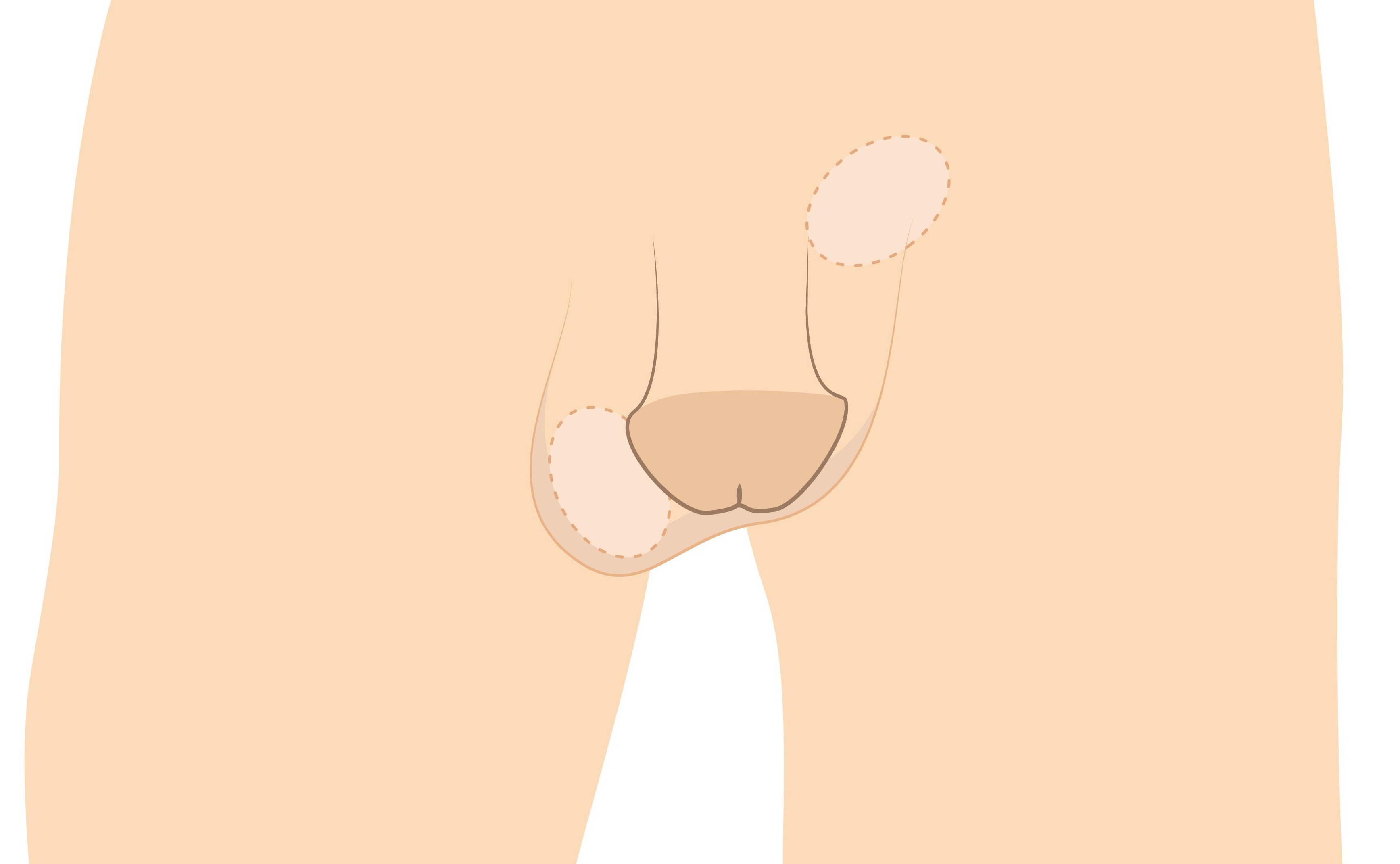
Illustration showing the difference between an undescended testicle and a testicle in its normal position.
Undescended testes don't usually cause pain unless there is a problem, such as testicular torsion — when the cord attached to the testis (the spermatic cord) is twisted.
Undescended testes should not be confused with retractile testes. This is when the testes temporarily pull up into the groin. This may happen when your baby or child is cold or upset. They will return to the usual position once your baby is warm or content again.
What causes undescended testicles?
The cause of undescended testes is often unknown, but there are several factors that may increase your baby's risk, such as:
- premature birth
- low birth weight
- a family history of undescended testicles
- exposure to cigarette smoking during pregnancy
Sometimes a baby is born with their testes in their scrotum, but they move up into the groin later. This may happen at any age before puberty. This condition is called 'acquired undescended testes' or 'ascending testis'.
When should my baby see a doctor?
Undescended testicles is usually found as part of a routine check of your baby after birth.
Visit your doctor or baby health clinic if you can't feel one or both testicles in your baby's scrotum.
See your doctor urgently if your baby has undescended testicles that are causing pain.
How are undescended testicles diagnosed?
Your doctor can diagnose undescended testicles during a physical examination. If they can't feel your baby's testicles, your baby may be referred for an ultrasound to locate them.
Your doctor may also check for other testicular conditions, such as inguinal hernia or retractile testicles. Retractile testicles (testicles that move in and out of the scrotum) can usually be gently moved into place. Undescended testicles cannot.
If your doctor can't find your baby's testicles, they will refer you to a paediatrician or paediatric surgeon.
How are undescended testicles treated?
If your baby's testicles have not come down by 3 to 6 months of age, they are unlikely to come down by themselves. Undescended testicles are usually treated with surgery from 6 months old.
During surgery, the surgeon gently stretches the spermatic cord and brings the testicle down into the scrotum, where they secure it in place. The operation is called 'orchidopexy'.
Your doctor will discuss with you the need for follow-up appointments.
What are the complications of undescended testicles?
It's important to treat undescended testes before reaching 2 years of age, as untreated undescended testicles can lead to complications including:
- reduced fertility later in life
- twisting of the spermatic cord, which may cut off the blood supply to the testes (testicular torsion). This is a medical emergency that needs surgery to save the testicle.
- an increased risk of testicular cancer.
- an increased risk of inguinal hernia.
Can undescended testicles be prevented?
Many risk factors for undescended testicles can't be changed, but avoiding smoking during pregnancy can help lower the risk of undescended testicles.
Resources and support
- Royal Children's Hospital Melbourne has information about undescended testicles.
- Sydney Children's Hospitals Network has a factsheet on surgery for undescended testes in children.
- HealthyWA has information about testicular conditions, including undescended testicles.
The Pregnancy, Birth and Baby video call service allows you to speak face-to-face with a maternal child health nurse. Video call is a free service and is available from 7am to midnight (AEST), 7 days a week (including public holidays).
You can also call the healthdirect helpline on 1800 022 222 (known as NURSE-ON-CALL in Victoria). A registered nurse is available 24 hours a day, 7 days a week.
Looking for support for Aboriginal and/or Torres Strait Islander people?
Find an Aboriginal Community Controlled Health Organisation (ACCHO) or affiliate near you.
Find out how we develop and review our content.
Last reviewed: December 2024
Need more information?
Undescended testicles | Better Health Channel

Undescended testes and orchidopexy factsheet


Causes of a lump on scrotum or a lump on testicles

Why are my testicles sore? Causes, other symptoms & treatment
Testicle injuries and conditions | Better Health Channel
Testicular conditions

What to expect during a male genital examination | Healthy Male
Lumps in the scrotum: Symptoms & Treatment | Healthy Male
Testicular torsion: Symptoms, diagnosis & treatment | Healthy Male