Skip to content
Pregnancy, Birth and Baby homeAustralian Government, Department of Health, Disability and Ageing (Opens in new tab)
Pregnancy, Birth and Baby home
Need to talk? Call 1800 882 436.
It's a free call with a maternal child health nurse. *call charges may apply from your mobile.
Is it an emergency? Dial 000
If you need urgent medical help, call triple zero immediately.
  1. Home/
  2. Women's health/
  3. Your body after having a baby/
  4. Postpartum endometritis

Postpartum endometritis

Key facts

  • Postpartum endometritis is an infection in the lining of your uterus after you give birth.
  • Symptoms include fever, tummy pain, feeling tender in the pelvis and smelly vaginal discharge.
  • Postpartum endometritis is treated with antibiotics.
  • Your chance of getting postpartum endometritis is higher after a caesarean section.
  • Use of antibiotics and antiseptics before a caesarean can lower your chance of getting postpartum endometritis.
  • On this page

    • What is postpartum endometritis?
    • What are the symptoms of postpartum endometritis?
    • What causes postpartum endometritis?
    • When should I see my doctor?
    • How is postpartum endometritis diagnosed?
    • How is postpartum endometritis treated?
    • What are the complications of postpartum endometritis?
    • Can postpartum endometritis be prevented?
    • Will postpartum endometritis affect my future pregnancies?
    • Resources and support

    What is postpartum endometritis?

    Postpartum endometritis is an infection in the lining of your uterus that happens after giving birth. Postpartum means 'after birth'.

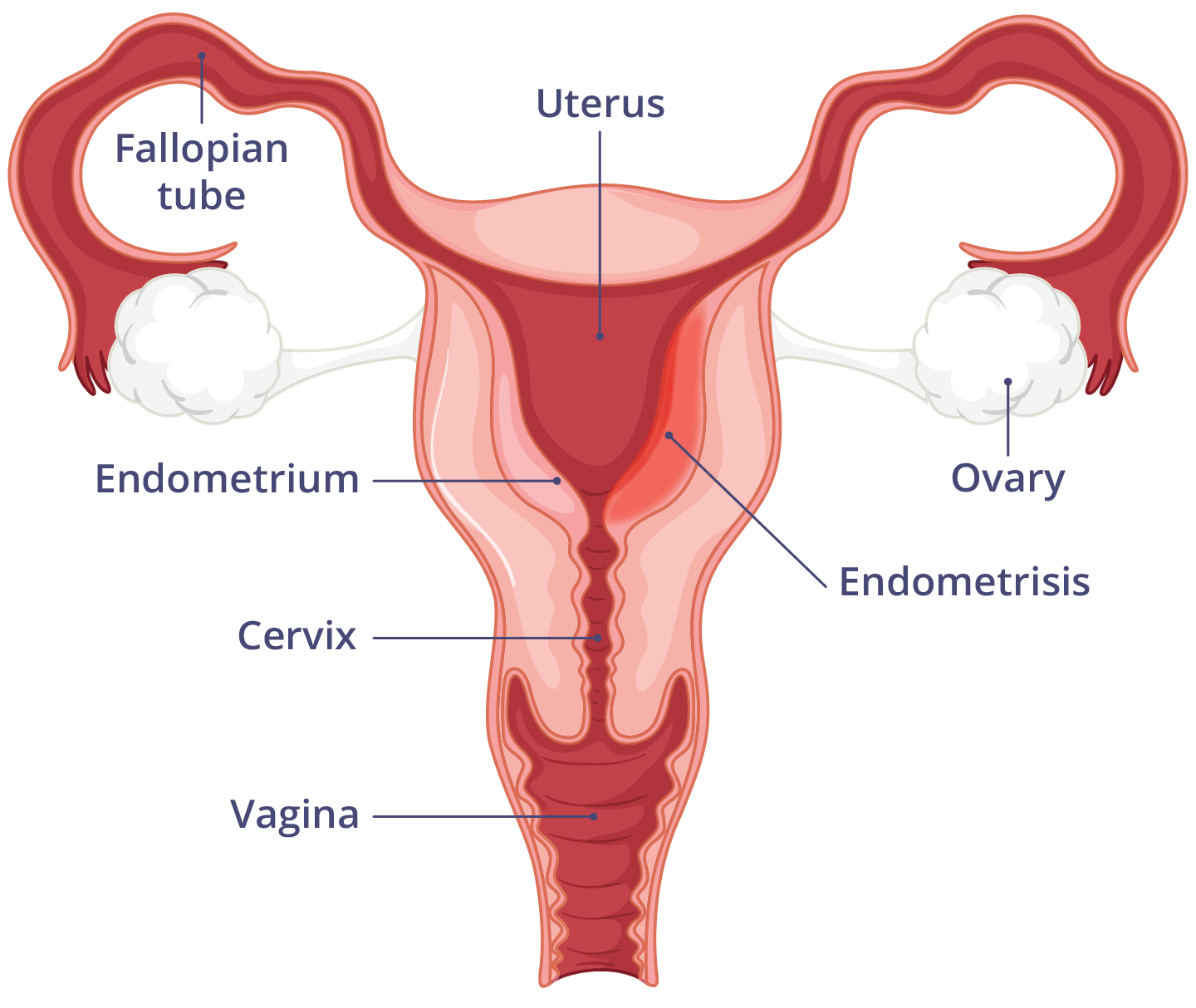
    Your uterus (womb) is in the middle of your pelvis. The inner layer lining your uterus is called the endometrium.

    Endometritis is when this lining becomes inflamed. This is usually caused by germs entering your uterus during birth. This can cause a bacterial infection (Opens in new tab).

    Postpartum endometritis usually happens in the first week after giving birth. However, sometimes it can happen up to 6 weeks after giving birth.

    Endometritis can also be unrelated to birth (chronic endometritis). This may be due to pelvic inflammatory disease (Opens in new tab) — an infection and inflammation of the uterus and ovaries. It causes scarring in these areas. Sexually transmitted infections (Opens in new tab) are the most common causes of pelvic inflammatory disease.

    Illustration of the female reproductive system with postpartum endometritis - endometrium is inflamed and red.

    Illustration of the female reproductive system with postpartum endometritis.

    How is postpartum endometritis different from endometriosis?

    Endometriosis (Opens in new tab) is when tissue from the lining of your uterus grows in other parts of your body. Symptoms of endometriosis are:

    • tummy pain (Opens in new tab)
    • heavy periods (Opens in new tab)
    • painful periods (Opens in new tab)

    Postpartum endometritis is an infection in the lining of your uterus.

    What are the symptoms of postpartum endometritis?

    The symptoms of postpartum endometritis are:

    • fever (Opens in new tab) — a temperature over 38°C
    • tummy pain — due to swelling of the endometrium
    • feeling tender in your pelvis
    • smelly vaginal discharge
    • an increase in bleeding from your vagina

    If you notice any of these symptoms, call your doctor or midwife as soon as possible.

    It can be hard to know what is normal after giving birth. Having some pain, vaginal bleeding and discharge is normal.

    If postpartum endometritis happens later, it might be milder and appear as bleeding after giving birth.

    CHECK YOUR SYMPTOMS — Use the Symptom Checker and find out if you need to seek medical help.

    What causes postpartum endometritis?

    Postpartum endometritis happens when bacteria enter your uterus during childbirth.

    Your uterus is free of bacteria until your waters break. This lets bacteria enter your uterus. These bacteria can cause an infection in the lining of your uterus.

    Any woman can get postpartum endometritis.

    Research shows that it affects up to:

    • 3 in 100 women after a vaginal birth
    • 1 in 3 women after a caesarean birth

    Things that increase your chance of getting postpartum endometritis are:

    • a long time between your 'waters breaking' and delivery of your baby
    • multiple checks of your vagina during childbirth
    • infection during pregnancy
    • postpartum haemorrhage
    • anaemia

    Endometritis is more likely if your uterus wall is damaged through surgery.

    When should I see my doctor?

    See your doctor if you think you have an infection after giving birth.

    Your doctor may refer you to an obstetrician.

    FIND A HEALTH SERVICE — The Service Finder can help you find doctors, pharmacies, hospitals and other health services.

    How is postpartum endometritis diagnosed?

    Your doctor will ask you about your symptoms and might examine you. To confirm the cause of your infection, they may do a:

    • vaginal swab
    • blood test (Opens in new tab)
    • urine test (Opens in new tab)

    How is postpartum endometritis treated?

    Most women with postpartum endometritis get better quickly with antibiotics (Opens in new tab). You should start feeling much better within a few days of starting the antibiotics.

    Your treatment will match the severity of your condition. Your doctor will decide which antibiotic is best for you. This is based on:

    • your symptoms
    • other medicines you take
    • any allergies
    • your test results

    Mild postpartum endometritis

    If you have a mild infection, you may be treated at home.

    Postpartum endometritis is considered mild if:

    • your infection is in a specific area of your body
    • you do not have fever
    • you do not have lots of symptoms

    Oral antibiotics are usually given for mild infections.

    Severe postpartum endometritis

    If your postpartum endometritis is severe, your doctor will care for you in a hospital.

    You need to be treated quickly with antibiotics.

    They will give you intravenous antibiotics (into your vein).

    You may also be given oxygen.

    Postpartum endometritis is considered severe if you have:

    • lots of symptoms
    • sepsis or septic shock

    What are the complications of postpartum endometritis?

    Postpartum endometritis can lead to sepsis, which is a medical emergency and can be fatal if not treated quickly. If you suspect you or someone else has sepsis, call triple zero (000) and ask for an ambulance.

    Complications of postpartum endometritis are usually rare. However, they can happen if the infection is not treated quickly.

    It can cause serious complications such as:

    • sepsis — inflammation of your whole body
    • peritonitis (Opens in new tab) — an infection of the membrane inside your abdomen
    • pelvic abscess (Opens in new tab) — in the area below your belly button
    • blood clots (Opens in new tab) — in your veins, pelvis or lungs

    Can postpartum endometritis be prevented?

    If you have a caesarean section, your doctor may offer you intravenous (IV) antibiotics. This lowers your chance of getting an infection.

    Will postpartum endometritis affect my future pregnancies?

    Quick treatment of postpartum endometritis usually prevents any long-term problems.

    If an infection is left untreated for too long, it may cause complications. This can lead to infertility.

    Resources and support

    If you think you may have postpartum endometritis, call your doctor or midwife straight away.

    RANZCOG has a resource on what to expect in the first few weeks after birth (Opens in new tab).

    ForWhen (Opens in new tab) connects new and expecting parents with perinatal and infant mental health services and support in their local area. Contact the service on 1300 24 23 22.

    Birth Trauma Australia (Opens in new tab) offers advice, resources and a peer-to-peer support program.

    The Centre of Perinatal Excellence (Opens in new tab) (COPE) offers information and has a list of support services.

    Perinatal Anxiety & Depression Australia (Opens in new tab) (PANDA) supports parents and families during pregnancy and throughout the first year of parenthood. Call the helpline on 1300 726 306 to speak with a counsellor.

    Speak to a maternal child health nurse

    Call Pregnancy, Birth and Baby to speak to a maternal child health nurse on 1800 882 436 (Opens in new tab) or video call. Available 7am to midnight (AET), 7 days a week.

    • North Metropolitan Health Service — Infections in obstetrics (Opens in new tab)
    • Therapeutic Guidelines — Introduction to postpartum endometritis (Opens in new tab)
    • JBRA Assisted Reproduction — Endometritis - Diagnosis, Treatment and its impact on fertility - A Scoping Review (Opens in new tab)
    • BMJ Best Practice — Endometriosis (Opens in new tab)
    • Royal Australian and New Zealand College of Obstetricians and Gynaecologists — Prophylactic antibiotics in obstetrics and gynaecology (Opens in new tab)
    • Cochrane Database of Systematic Reviews — Vaginal preparation with antiseptic solution before cesarean section for preventing postoperative infections (Opens in new tab)
    • Cochrane Database of Systematic Reviews — Antibiotic regimens for postpartum endometritis (Review) (Opens in new tab)

    Find out how we develop and review our content.


    Last reviewed: February 2025

    Need more information?

    These trusted information partners have more on this topic.

    Pelvic inflammatory disease (PID)

    Pelvic inflammatory disease (PID) is caused by an infection such as gonorrhoea, chlamydia or non-specific urethritis (NSU) spreading into a woman’s reproductive organs.
    WA Health logo
    Learn more on WA Health website

    Pelvic inflammatory disease (PID) | Better Health Channel

    Pelvic inflammatory disease (PID) occurs when an infection spreads from the vagina to the cervix and fallopian tubes.
    Better Health Channel logo
    Learn more on Better Health Channel website

    Pelvic Inflammatory Disease | Family Planning NSW

    Family Planning Australia logo
    Learn more on Family Planning Australia website

    Pelvic Floor Muscle Damage | Birth Trauma Australia

    The pelvic floor muscles are a supportive basin of muscle attached to the pelvic bones by connective tissue to support the vagina, uterus, bladder and bowel.
    Birth Trauma Australia logo
    Learn more on Birth Trauma Australia website

    Pelvic floor | Better Health Channel

    Pelvic floor exercises are designed to improve muscle tone and prevent the need for corrective surgery.
    Better Health Channel logo
    Learn more on Better Health Channel website

    Medications - non-steroidal anti-inflammatory drugs | Better Health Channel

    Non-steroidal anti-inflammatory medicines should always be used cautiously and for the shortest time possible.
    Better Health Channel logo
    Learn more on Better Health Channel website

    Pelvic floor exercises & care: in pictures | Raising Children Network

    Your pelvic floor holds your bladder, bowel and uterus in place, but pregnancy and birth can weaken it. Do pelvic floor exercises: squeeze, lift and hold.
     logo
    Learn more on website

    Pelvic Organ Prolapse | Jean Hailes

    Understand pelvic organ prolapse, its symptoms and causes, and discover treatment options from lifestyle changes to medical support.
    Jean Hailes logo
    Learn more on Jean Hailes website

    ACD A-Z of Skin - Post-Inflammatory Pigmentation

    Post-Inflammatory Pigmentation: Damage to the skin from trauma or inflammation may result in discolouration of the affected area
    Australasian College of Dermatologists logo
    Learn more on Australasian College of Dermatologists website

    Persistent Pelvic Pain | Jean Hailes

    Learn how persistent pelvic pain affects women, what causes it, and how to get support. Explore treatments, management options and personal stories.
    Jean Hailes logo
    Learn more on Jean Hailes website

    Related pages

    • Pelvic inflammatory disease

    Find a health service

    Search now

    Need further advice or guidance from our maternal child health nurses?
    1800 882 436 Video call
    Logo for Pregnancy, Birth and Baby

    Pregnancy, Birth and Baby is funded by the Australian Government and operated by Healthdirect Australia.

    About

    About Pregnancy, Birth and BabyAbout our contentInformation partnersOur privacy commitmentTerms of useHow we use AIPromotional material

    Explore

    A to Z topicsDue date calculatorFind local health servicesGlossary of pregnancy and labourPregnancy and parenting in picturesPregnancy and baby appsSymptom Checker (Opens in new tab)

    Connect

    Contact usVideo callNewslettersLinking to us (Opens in new tab)Consumer engagement (Opens in new tab)

    Follow

    Australian Government, Department of Health, Disability and AgeingLogo for healthdirect Australia

    Pregnancy, Birth and Baby’s information and advice are developed and managed within a rigorous clinical governance framework (Opens in new tab).

    This site is protected by reCAPTCHA and the Google Privay Policy (Opens in new tab) and Terms of Service (Opens in new tab) apply.

    Healthdirect Australia acknowledges the Traditional Owners of Country throughout Australia and their continuing connection to land, sea and community. We pay our respects to the Traditional Owners and to Elders both past and present.

    © 2026 Healthdirect Australia Limited

    This information is for your general information and use only and is not intended to be used as medical advice and should not be used to diagnose, treat, cure or prevent any medical condition, nor should it be used for therapeutic purposes.
    The information is not a substitute for independent professional advice and should not be used as an alternative to professional health care. If you have a particular medical problem, please consult a healthcare professional.
    Except as permitted under the Copyright Act 1968, this publication or any part of it may not be reproduced, altered, adapted, stored and/or distributed in any form or by any means without the prior written permission of Healthdirect Australia.