

Low blood pressure during pregnancy
Key facts
- Your blood pressure is a measure of how strongly your blood pushes against the walls of the blood vessels.
- Low blood pressure during pregnancy is common and not usually a cause for concern.
- Your blood pressure will return to pre-pregnancy levels after you give birth.
- Symptoms of low blood pressure during pregnancy include feeling tired or fatigued and a condition known as syncope (feeling faint and passing out).
- In rare cases, low blood pressure can be dangerous, so it’s important to let your doctor or midwife know if you notice symptoms of low blood pressure.
What is low blood pressure in pregnancy?
Your blood pressure is a measure of how strongly your blood pushes against the walls of the blood vessels.
It's normally recorded in 2 numbers:
- The top number (systolic) is the pressure when the heart is pumping.
- The bottom number (diastolic) is the pressure in between each beat.
Normal blood pressure in pregnancy is where the top number is below 140 and the bottom number is below 90 — described as '140 over 90' (140/90). Blood pressure is measured in units known as ‘millimetres of mercury’ or mmHg.
Having dangerously low blood pressure is uncommon in pregnancy. It’s more concerning to have high blood pressure, and about 1 in 8 pregnancies has higher blood pressure than normal. High blood pressure is also called hypertension.
It’s common in pregnancy for your blood pressure to fall below normal in your first trimester. It continues to fall in your second trimester. Blood pressure then rises towards pre-pregnancy levels by the time your baby is born.
What causes low blood pressure in pregnancy?
Your body changes rapidly during pregnancy and some of these changes can affect your blood pressure. When you’re pregnant, blood vessels expand. This helps increase blood flow to your baby. There are also many hormonal changes that affect your circulatory system. All of these changes are normal and can cause your blood pressure to drop during pregnancy.
Are there any risk factors for low blood pressure in pregnancy?
Low blood pressure in pregnancy is more common if you are underweight or if you have low muscle mass (small or weak muscles).
Are there any risks to me and my baby if I have low blood pressure during pregnancy?
A slight drop in your blood pressure in the first half of your pregnancy is unlikely to increase the risk of problems for you or your baby.
When should I see my doctor?
You can discuss your blood pressure at your regular antenatal checks with your midwife, doctor or nurse. If you feel dizzy or faint, call your midwife, or call Pregnancy, Birth and Baby to speak to a maternal child health nurse on 1800 882 436 or video call. Available from 7 am to midnight (AET), 7 days a week (including public holidays).
What are symptoms of low blood pressure in pregnancy?
Symptoms of low blood pressure in pregnancy include feeling tired, fatigued and a condition known as syncope (feeling faint and passing out).
How is low blood pressure in pregnancy diagnosed?
If you're pregnant, your midwife, doctor or nurse will likely check your blood pressure at every antenatal visit.
Your blood pressure reading gives important information about your health and your baby’s health. Your midwife or doctor checks your blood pressure to see if it is too high. High blood pressure can be a sign of a condition called pre-eclampsia.
Blood pressure can change throughout the day. It may vary depending on the time of day, after eating, your stress levels and during or after physical activity. This means one reading may not show your usual blood pressure. For this reason, your midwife, doctor or nurse may measure your blood pressure more than once, or on both arms if there is concern. Different equipment may also give different readings. For example, an automatic blood pressure machine may give higher readings than a manual machine.
While your blood pressure is being measured, sit comfortably with your legs resting on a flat surface. Your arm should be resting at the level of your heart. Tell your midwife, doctor or nurse if you are feeling stressed or concerned during your appointment.
Blood pressure is measured with an inflatable cuff, usually on the upper part of your right arm.
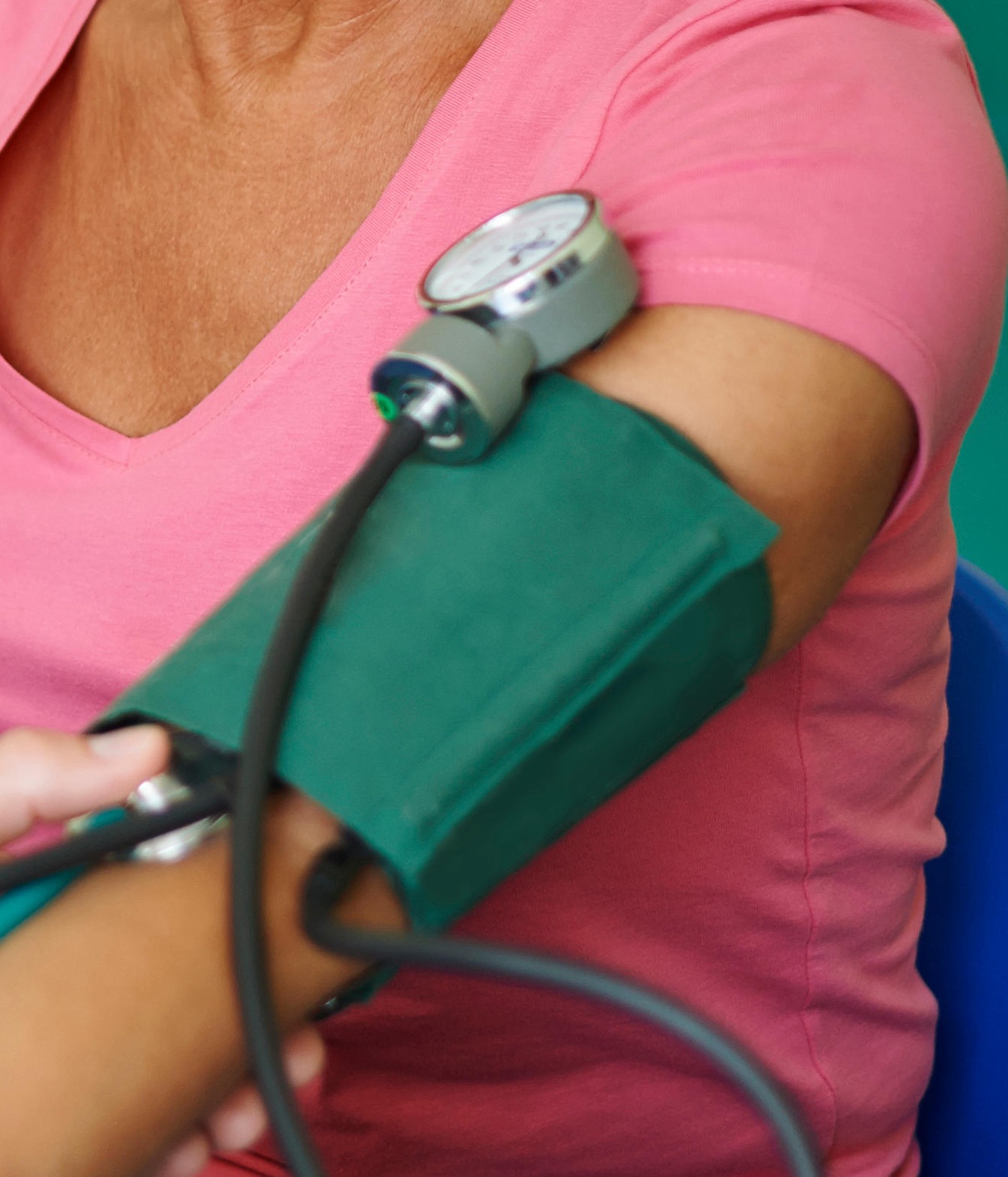
Your doctor or midwife will take your blood pressure at your antenatal appointments using a blood pressure cuff.
How is low blood pressure managed?
Because low blood pressure is a normal part of a healthy pregnancy, you might not need any treatment if your blood pressure drops in the first half of your pregnancy.
If you notice symptoms of low blood pressure, let your midwife, doctor or nurse know at your next pregnancy check.
Your blood pressure will probably start to return to normal levels on its own during your third trimester.
How do I deal with dizziness?
Here are some things you can do to avoid feeling faint:
- Drink plenty of water.
- Stand up slowly after sitting or when getting out of bed or the bath.
- Try not to stand for long periods of time, but if you need to stand, leg exercises and support stockings can improve your blood flow.
- Have something to eat at regular intervals to keep your blood sugar stable.
- Lie on your side instead of your back.
If you start to feel faint, sit or lie down until the dizziness goes away.
If you're suffering from nausea and vomiting, speak to your midwife or doctor to find out what treatment might help.
If you are concerned about your symptoms, use healthdirect's online Symptom Checker to get advice on when to seek medical attention.
Resources and support
- For more information about routine health tests during your pregnancy, see the Australian Government Department of Health, Disability and Ageing fact sheet.
- Visit the Australian Government Department of Health and Aged Care fact sheet outlining the stages of pregnancy.
- To find a women’s health doctor near you, visit The Royal Australian College of Obstetricians and Gynaecologists.
Information for Aboriginal and/or Torres Strait Islander peoples
Baby Coming You Ready — access culturally safe resources for Aboriginal and Torres Strait Islander parents-to-be and new parents.

Speak to a maternal child health nurse
Call Pregnancy, Birth and Baby to speak to a maternal child health nurse on 1800 882 436 or video call. Available 7am to midnight (AET), 7 days a week.
Find out how we develop and review our content.
Last reviewed: February 2026
Need more information?
Dizziness - orthostatic hypotension | Better Health Channel

Blood pressure (low) - hypotension | Better Health Channel