


Linea nigra
Key facts
What is linea nigra?
Linea nigra (sometimes called the 'pregnancy line') is a dark line of skin down the middle of your abdomen. It starts from your belly button and goes down to your pubic area. In some people it also goes up towards the top of their abdomen.
It often develops during your first trimester of pregnancy. It can also occur in people who aren't pregnant.
What are the symptoms of linea nigra?
Linea nigra does not cause any symptoms. Usually, it will fade after you give birth. You may also have it again in your next pregnancies.
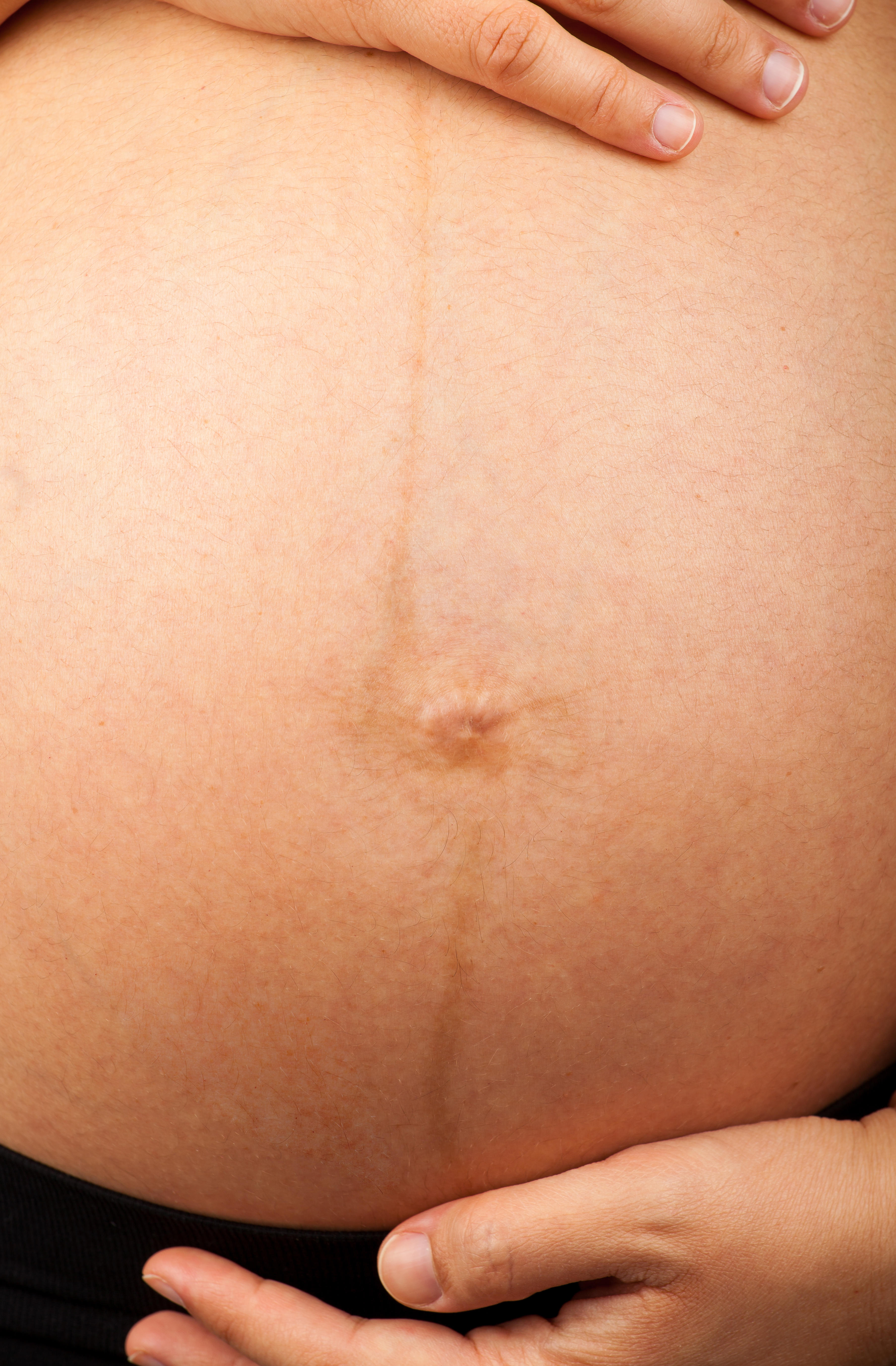
Image of linea nigra (sometimes called the 'pregnancy line').
What causes linea nigra?
When you are pregnant, hormonal changes in your body cause your skin to make more melanin. Melanin is the substance that gives your skin it's colour. Higher melanin levels can cause some areas of your skin to become darker during pregnancy. This is more likely if you have naturally darker skin.
The linea nigra is one of the areas that can become darker. It is caused by darkening of your linea alba. This is a band of connective tissue that joins your abdominal muscles together.
When should I see my doctor or midwife?
If you have a dark line on your abdomen and you are not sure what it is, you can show it to your doctor or midwife.
See your doctor if you notice any other changes or dark areas of skin on your abdomen. There are some health conditions and moles that can show up as a dark patch of skin.
How is linea nigra diagnosed?
Your doctor or midwife can diagnose linea nigra by looking at your abdomen during your routine antenatal tests. No specific tests are needed to diagnose linea nigra.
During your appointments, you can have a support person present with you. This can be a partner, family member or friend of your choice. Before your doctor or midwife examines you, they must explain what they will do. It is your choice if you want a test or not. This is called informed consent.
Read more about understanding informed consent and your rights when having a baby.
Read more about checkups, tests and scans available during your pregnancy.
How is linea nigra treated?
Linea nigra doesn't need treatment. Usually it will fade over time after you have given birth. For some people it will not fade.
Some people try to bleach the area, but these treatments don't work. Keep in mind also that bleaching creams containing hydroquinone can be harmful for your baby and should not be used during pregnancy.
What are the complications of linea nigra?
If you have linea nigra, it will not cause any health problems for you or your baby. You might find that the line gets darker and wider as your pregnancy progresses. This is normal.
Can I prevent getting linea nigra?
There is no proven way to completely prevent linea nigra. It's possible that folate (also known as folic acid) may lower your chance of developing linea nigra.
Self-care tips
To lower your chance of developing linea nigra, try to eat foods rich in folate, such as green leafy vegetables, lentils and citrus fruits. Some breads and cereals have folic acid added during the manufacturing process.
In any case, it is important to take a folic acid supplement for at least a month before you become pregnant and for the first 3 months of your pregnancy. This is, because folic acid supplements can help lower your baby's risk of having a neural tube defect.
Sun exposure may make linea nigra darker. It is best to protect your abdomen from the sun. Sun protection is also important for your general health, to lower your risk of skin cancer.
Resources and support
Visit The Royal Women's Hospital website for information on common concerns in early pregnancy.
Read about self-care for expecting and new parents at PANDA.
Other languages
Visit Healthy Horizons to learn about health conditions in a range of community languages. This includes information on skin diseases, reproductive health and mental health.
Aboriginal and/or Torres Strait Islander peoples
You can find out more about Aboriginal and/or Torres Strait Islander pregnancy health on Stronger Bubba Born, or watch the How to Have a Safer Pregnancy video.
Looking for information for sexually and gender-diverse families?
PANDA has inclusive and appropriate support for LGBTIQA+ expecting and new parents.

Speak to a maternal child health nurse
Call Pregnancy, Birth and Baby to speak to a maternal child health nurse on 1800 882 436 or video call. Available 7am to midnight (AET), 7 days a week.
Find out how we develop and review our content.
Last reviewed: October 2024