Skip to content
Pregnancy, Birth and Baby homeAustralian Government, Department of Health, Disability and Ageing (Opens in new tab)
Pregnancy, Birth and Baby home
Need to talk? Call 1800 882 436.
It's a free call with a maternal child health nurse. *call charges may apply from your mobile.
Is it an emergency? Dial 000
If you need urgent medical help, call triple zero immediately.
  1. Home/
  2. Parenting and family/
  3. Baby safety/
  4. How to choose safe toys for your child

How to choose safe toys for your child

Key facts

  • Toys and play are important for your child's motor (physical), cognitive (mental) and emotional development.
  • Good toys can teach your child new skills and keep them engaged.
  • Toys should meet Australian safety standards.
  • Make sure that your child's toys are appropriate for their age, with no long strings or small parts.
  • On this page

    • What is a good toy?
    • Why are toys important?
    • What is a safe toy?
    • Where can I buy toys?
    • Tips for buying toys
    • Resources and support

    What is a good toy?

    A good toy doesn't need to be expensive. It should be safe for your child, match their age and meet basic safety standards.

    You can choose from a variety of toys for your child, such as:

    • soft toys, dolls and action figures
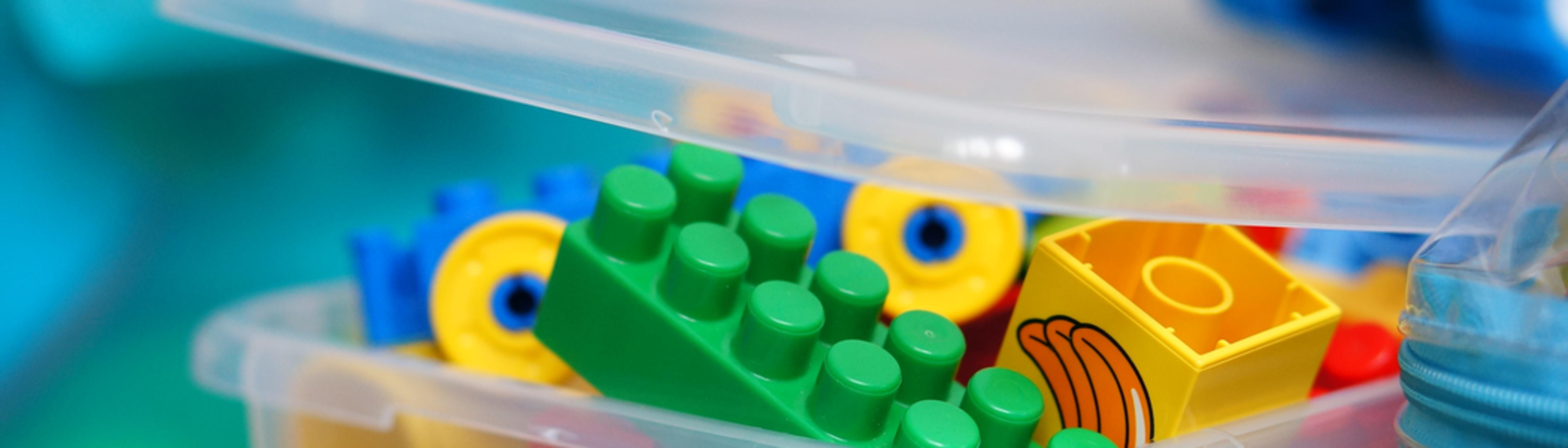
    • puzzles and building blocks
    • musical toys such as whistles and xylophones
    • art and craft toys

    Good toys should help encourage your child to:

    • talk and develop social skills
    • use their imagination and be creative
    • move and develop physical skills
    • understand the world around them

    Why are toys important?

    Playing with toys is important for your child's physical and mental development. Toys can help with thinking, movement, emotions, social skills and language development. They can help children grow up confident, creative and happy.

    What is a safe toy?

    Most toys will have a label with a recommended age range. For example, a toy with choking hazards may be recommended only for children aged over 3 years.

    In Australia, the Australian Competition and Consumer Commission (ACCC) (Opens in new tab) has a strong impact on these recommendations. All toys should meet certain sections of either the Australian Safety Standard AS/NZS 8124 (Opens in new tab) or similar international, European or American standards.

    You can report an unsafe toy (Opens in new tab) on the ACCC product safety website.

    Toys can cut, choke, strangle or cause internal injuries if they are not safe, or not used safely. Some things to consider when choosing toys are their:

    • size and shape
    • materials and fillings
    • batteries
    • strings

    Size and shape

    The smaller your child, the bigger the toy should be. Toys with small parts are dangerous for babies and young children.

    This is because young babies explore their world by putting things in their mouths (Opens in new tab), noses (Opens in new tab) and ears (Opens in new tab).

    Children under 3 years have an immature cough reflex. This means that they can choke easily on small items.

    A child under 3 years should not play with toys that:

    • are the size of a ping-pong ball or smaller
    • can easily break into small parts
    • are made of foam, as they can bite off chunks that can cause choking

    Be careful of toys that can break easily. Small, broken pieces can be a choking hazard. Broken pieces may also be sharp and can injure your child.

    Materials and fillings

    Check that any paint or fillings used on or inside toys are non-toxic.

    Check that soft toys have a:

    • clean filling, free of harmful substances
    • filling that can't come out easily and cause choking

    Regularly make sure that parts of soft toys are attached properly, such as hard eyes, noses or buttons.

    Tips for batteries

    Batteries should not be handled by children. They are toxic if swallowed and they can cause choking. The battery boxes of toys containing batteries must be firm and closed.

    Strings

    Strings or tails on toys:

    • can strangle a child if they become caught in them
    • can cut through their skin
    • should not be longer than 22cm

    Supervision

    Small children need close supervision with toys to help prevent accidents from happening.

    If your child is choking, having trouble breathing or unconscious, call triple zero (000) and ask for an ambulance.

    Where can I buy toys?

    You can get toys by:

    • buying them new from toy stores and department stores
    • borrowing or swapping them with friends, family, playgroups or toy libraries
    • buying them second-hand from fairs, garage sales or online
    • making your own

    If you get a second-hand toy for your child, make sure:

    • it is safe
    • the product hasn't been recalled
    • it includes the instructions for safe use
    • all parts are in good working order

    Tips for buying toys

    Ask yourself these questions before you buy toys for your child:

    • Would it be fun to play with?
    • Would it help my child's development?
    • Is it suited to the age of my child?
    • Is it well made?
    • Does it have any small parts?
    • Is it made with any toxic materials?

    Resources and support

    For more information on choosing toys, you can visit:

    • the Australian Competition and Consumer Commission (Opens in new tab)
    • Product Safety Australia (Opens in new tab)
    • Australian Toy Association (Opens in new tab)

    You can check before buying or borrowing an item to use with your child through the Australian Government's product safety recalls (Opens in new tab) website. They also offer a free do-it-yourself choke check safety tool (Opens in new tab).

    You may consider taking your child to a playgroup, where they will have access to the right toys. Visit the Playgroup Australia website to find a playgroup near you (Opens in new tab).

    Speak to a maternal child health nurse

    Call Pregnancy, Birth and Baby to speak to a maternal child health nurse on 1800 882 436 (Opens in new tab) or video call. Available 7am to midnight (AET), 7 days a week.

    • Northern clinics — Children’s only profession: Playing with toys (Opens in new tab)
    • Applied Developmental Science — Children’s Utilization of Toys is Moderated by Age-Appropriateness, Toy Category, and Child Age (Opens in new tab)
    • ACCC Product Safety — Toys for children up to and including 36 months of age mandatory standard (Opens in new tab)
    • ACCC Product Safety — Toys that children push and pull guide (Opens in new tab)
    • Acta Clinica Croatica — Foreign body aspiration and ingestion in children (Opens in new tab)
    • NSW Government — Children’s products and toy safety (Opens in new tab)
    • ACCC Product Safety — Report unsafe product (Opens in new tab)
    • Australian Competition and Consumer Commission (ACCC) — Review of mandatory safety standards for children’s toys (Opens in new tab)

    Find out how we develop and review our content.


    Last reviewed: September 2025

    Need more information?

    These trusted information partners have more on this topic.

    Great ideas for play activities with your baby – Ngala

    Your baby's favourite thing to play with is you! Through play your baby’s brain and body develop and they learn new skills.
    Ngala logo
    Learn more on Ngala website

    Play ideas for toddlers – Ngala

    Your toddler will be busy all of their waking hours exploring the world through play. Play really is a child’s work. Your toddler will be busy all of their waking...
    Ngala logo
    Learn more on Ngala website

    Importance of play for children | StartingBlocks.gov.au

    Discover how play-based learning supports your child’s physical, social, emotional and cognitive development. Learn how educators use play to build skills in communication, creativity, problem-solving and independence in early childhood education.
    Starting Blocks logo
    Learn more on Starting Blocks website

    Parent–child play conversation guide - Emerging Minds

    Intended for parents, this guide compliments the practice paper ‘Parent–child play: A mental health promotion strategy for all children’.
    Emerging Minds logo
    Learn more on Emerging Minds website

    Kids Health Info : Play

    Royal Children's Hospital logo
    Learn more on Royal Children's Hospital website

    Healthy Eating Active Living - Getting active at home and in play

    Healthy Eating Active Living NSW logo
    Learn more on Healthy Eating Active Living NSW website

    Childhood games & toys: 0-8 years | Raising Children Network

    Toys and games for kids – what’s best? It’s about matching play to your child’s age and interests. You can often do this with simple activities and objects.
     logo
    Learn more on website

    Soft Toys And Comforters In Infant Care: Are They Safe For Babies? | Red Nose Australia

    Soft toys and comforters are not recommended to be used in the sleep space until at least 7 months old - corrected for prematurity.
    Red Nose logo
    Learn more on Red Nose website

    Babies' toys guide | ACCC Product Safety

    Babies can suffer a range of injuries from unsafe toys. Make sure you buy sturdy and well-made toys that are appropriate for a baby.
    ACCC Product Safety logo
    Learn more on ACCC Product Safety website

    Kids Health Info : Toy safety

    Royal Children's Hospital logo
    Learn more on Royal Children's Hospital website

    Related pages

    • Playing with your baby
    • Playing with your child

    Search our site for

    • Child Development
    • Child safety

    Find a health service

    Search now

    Need further advice or guidance from our maternal child health nurses?
    1800 882 436 Video call
    Logo for Pregnancy, Birth and Baby

    Pregnancy, Birth and Baby is funded by the Australian Government and operated by Healthdirect Australia.

    About

    About Pregnancy, Birth and BabyAbout our contentInformation partnersOur privacy commitmentTerms of useHow we use AIPromotional material

    Explore

    A to Z topicsDue date calculatorFind local health servicesGlossary of pregnancy and labourPregnancy and parenting in picturesPregnancy and baby appsSymptom Checker (Opens in new tab)

    Connect

    Contact usVideo callNewslettersLinking to us (Opens in new tab)Consumer engagement (Opens in new tab)

    Follow

    Australian Government, Department of Health, Disability and AgeingLogo for healthdirect Australia

    Pregnancy, Birth and Baby’s information and advice are developed and managed within a rigorous clinical governance framework (Opens in new tab).

    This site is protected by reCAPTCHA and the Google Privay Policy (Opens in new tab) and Terms of Service (Opens in new tab) apply.

    Healthdirect Australia acknowledges the Traditional Owners of Country throughout Australia and their continuing connection to land, sea and community. We pay our respects to the Traditional Owners and to Elders both past and present.

    © 2026 Healthdirect Australia Limited

    This information is for your general information and use only and is not intended to be used as medical advice and should not be used to diagnose, treat, cure or prevent any medical condition, nor should it be used for therapeutic purposes.
    The information is not a substitute for independent professional advice and should not be used as an alternative to professional health care. If you have a particular medical problem, please consult a healthcare professional.
    Except as permitted under the Copyright Act 1968, this publication or any part of it may not be reproduced, altered, adapted, stored and/or distributed in any form or by any means without the prior written permission of Healthdirect Australia.