
Search our site for
Spina bifida
Key facts
- Spina bifida is a neural tube defect that affects the development of your baby's spine early in pregnancy.
- If your child has mild spina bifida they may have no symptoms or minimal symptoms.
- Spina bifida can cause problems with leg weakness and movement, sensation, bladder and bowel control or learning difficulties.
- Taking a daily folate supplement before and during pregnancy can help lower your risk of having a baby with spina bifida.
- Spina bifida can be diagnosed with a routine pregnancy ultrasound scan.
What is spina bifida?
Spina bifida is a type of neural tube defect (NTD) where your baby's spine and spinal cord don't develop properly during the first month of pregnancy.
Spina bifida happens when your neural tube doesn’t close properly as it is forming. In the embryo, the neural tube develops into the spinal cord and brain. When the neural tube doesn't close properly, it leaves a gap, leading to spina bifida. This can lead to various health problems.
Spina bifida affects the parts of the body receiving their nerve supply from or below the gap in the spine. It normally affects the lower part of the spine, but it can happen anywhere along it.
Each person with spina bifida is affected differently.
What are the different types of spina bifida?
There are different types of spina bifida. The types are based on how severe the defect is and where it is located in the spine.
- Spina bifida occulta — the mildest and most common type of spina bifida. It happens when a small part of the vertebrae (the small, stacked bones that form your spine) doesn't develop properly. This causes a small gap between the bones. There is no visible opening in your baby's back. You may see a patch of hair, small dimple or birthmark on your baby's skin above the area affected. Many people don’t know they have this, which is why it is called 'hidden' (occulta) spina bifida.
- Meningocele — a sac of fluid bulges through the gap between the vertebrae. The membranes that surround the spinal cord (meninges) are contained in the fluid sac. It usually doesn't cause any nerve damage. Some people with meningocele have minor disabilities.
- Myelomeningocele — the most serious and severe type of spina bifida. The sac of fluid that bulges out through an opening in your spine contains parts of the spinal cord or spinal nerves. The sac may or may not be covered with the meninges (membranes) that cover the spinal cord. This kind of spina bifida can cause moderate to severe disabilities.
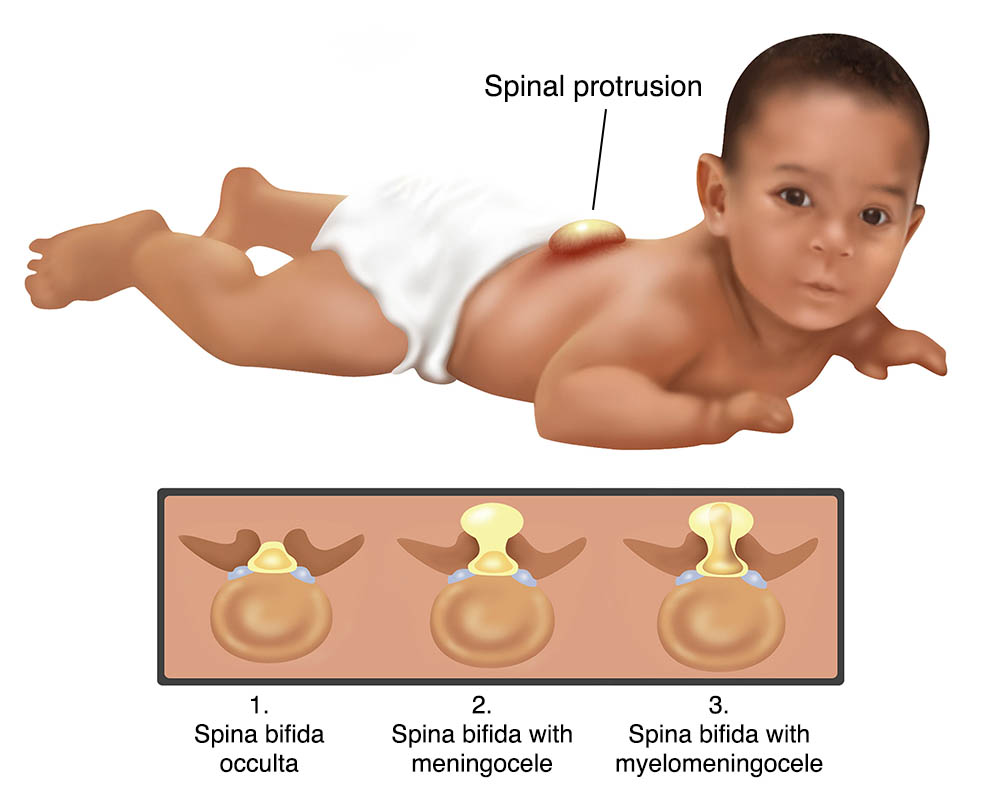
Spina bifida is a birth defect involving the development of a baby's spine and spinal cord during the first month of pregnancy.
What are the symptoms of spina bifida?
If your child has spina bifida, their symptoms depend on how severe it is. Symptoms can be:
- muscle weakness, paralysis or loss of feeling — affecting movement in the hips, legs and feet
- spine deformities, such as scoliosis
- bladder and bowel incontinence
- hydrocephalus
- learning difficulties
- problems with sexual function
- type 2 Chiari malformation
Spina bifida occulta does not usually have any symptoms.
What causes spina bifida?
The exact cause of spina bifida isn't fully understood. Doctors and scientists believe it's influenced by genetic, environmental and nutritional factors.
Your baby may be at higher risk of spina bifida if:
- you do not get enough folate in your diet or with supplements
- your family has a history of neural tube defects
- you have insulin-dependent diabetes and your blood sugar levels are not well controlled
- you are living with obesity
- you take certain medicines to treat epilepsy or mental health problems
When should I see my doctor?
If you're planning to become pregnant, discuss with your doctor which supplements may lower your baby's risk of neural tube defects.
If your child is living with spina bifida, visit their doctor if you suspect your child has:
- a urinary tract infection (UTI) — they may have fever, they may be irritable and their urine may look or smell different to usual
- bowel problems — their tummy is more bloated than usual, they are leaking poo or having trouble managing their bowel routine
- problems with their surgically inserted shunt — they have a sudden change in the size of their head, are sleepy or have swelling near their shunt
Read more about how to tell if your child is sick.
How is spina bifida diagnosed?
Your doctor may diagnose your baby with spina bifida on a routine pregnancy ultrasound scan and blood test between 12 and 20 weeks of pregnancy.
If your baby is diagnosed with spina bifida during pregnancy, you will be referred to a specialist obstetrician, also known as a maternal foetal medicine specialist. They may recommend tests to check your baby's spine and brain development. They will also discuss your child's diagnosis and what it means for you and your baby.
You may choose to get advice on whether to consider terminating your pregnancy. Remember, there is no right or wrong answer. Your decision is very personal and individual.
If your baby has spina bifida, it is a good idea to find out as much as you can about what it will mean for you and your unborn child. Here are some tips to help:
- Ask your doctor for a referral to a genetic counsellor, who can help you understand more about spina bifida and plan for the future.
- Learn about prenatal screening (genetic screening in pregnancy) and antenatal care during your pregnancy.
- Read about shared decision making and understanding informed consent and your rights when having a baby.
How is spina bifida treated?
Treatment can include surgeries and therapies to manage your child's symptoms and disability. Their exact treatment depends on how severe their condition is.
Babies born with spina bifida usually need to stay in the NICU (neonatal intensive care unit) for a few weeks. During this time their medical team will assess and treat their health issues.
Surgery
Your child may need surgery on their spinal cord, either in the uterus or 1 to 2 days after they are born. Surgery is needed to prevent an infection or more damage to their spinal cord.
If your baby has hydrocephalus, they may need a hollow tube called a ventriculoperitoneal (VP) shunt put in under their skin in their head. This VP shunt drains extra fluid from their brain.
Sometimes your child may also need hip, leg or foot surgery when they are older.
Symptom and disability management
Your child will usually need ongoing care to manage their symptoms. This will involve a team of doctors and allied health professionals, including:
- neurosurgeons, orthopaedic surgeons and urologists
- paediatricians
- physiotherapists
- occupational therapists
- dietitians
- social workers
Living with spina bifida
Depending on your child's condition they may need ongoing care from a range of healthcare professionals throughout their life. This may be in a hospital or within your community.
Support may include:
- mobility aids
- protecting your child's skin
- bladder and bowel management
- learning support
- trying to keep active
Mobility aids
Your child may need mobility aids such as:
- walking sticks
- crutches
- walkers
- wheelchairs
You and your child may also benefit from using equipment for self-care such as:
- bath boards and bath benches
- shower chairs
- sliding boards to help your child move from one surface to another
Your child's physiotherapist and occupational therapist can help guide you on which aids they need.
Protecting your child's skin
Your child may be at a higher risk of injuring their skin, including developing pressure sores. This is because their mobility may be limited. Their sores may take longer to heal. Your child may not feel potential dangers such as hot objects or sharp edges.
They can develop serious complications with their skin.
Here are some tips to protect your child's skin:
- Check your child's skin daily.
- Move and shift your child's weight regularly to take pressure off their body.
- Make sure your child's bath water is not too hot.
- Do not place food and drinks directly on your child's lap.
- Dry between your child's toes after each bath or shower.
- Always check your child's skin when using new splints or shoes.
- Always put on sunscreen, a hat and protective clothing if going outdoors.
Bladder and bowel management
Most children with spina bifida have bladder and bowel problems, including incontinence, due to damage to their spinal cord.
To manage your child's bowels, they may need supports including:
- exercises
- medicines
- correct positioning at the toilet
- going to the toilet at the same time everyday
- adjusting your child's fluids and diet to support their bowels
Your child may have trouble controlling and fully emptying their bladder. As a result, your child may develop urinary tract infections (UTIs). This can damage their kidneys. To protect your child's kidneys, they may have a catheter inserted to keep their bladder empty.
It is important you encourage your child to drink plenty of water to support bladder health.
Learning and developmental support
Many children living with spina bifida do well in school. However, some may have difficulties learning.
Choosing the right learning environment for your child may seem overwhelming. Allow plenty of time to find the best environment for your child. Speak with your child's healthcare team for guidance.
Keeping active
Even if your child has limited mobility, it is important for your child to be active for their physical, social and emotional wellbeing. Your child's physiotherapist can guide you on choosing an appropriate activity for your child.
Here are some examples of activities:
- swimming or hydrotherapy
- hand cycling
- modified rock climbing, surfing or sailing
- wheelchair yoga or dancing
- playing a sport — wheelchair basketball, tennis, wheelchair racing
Emotional support
Caring for a child living with spina bifida has its challenges.
At times you may feel:
- alone
- anxious
- burnt out
Looking after yourself is a priority. Accept support from your friends and family. This will help you create a network of people to lean on during hard times.
You can also seek support from social workers, psychologists and your child's healthcare team. A support group in the community can introduce you to people going through similar experiences to you.
The Australian Government's Carer Gateway provides advice and support groups. Your child may qualify for support from the National Disability Insurance Scheme.
For advice and to get connected to local mental health services, call Medicare Mental Health on 1800 595 212. Check the operating times.
What are the complications of spina bifida?
Spina bifida can lead to complications, which may affect your child in different ways. Complications may include:
- complications of surgery — such as infections, loss of blood or damage to their spinal cord
- complications of a VP shunt — such as blockage or infection
- pressure sores
- kidney damage
- Tethered cord syndrome — where your child's spinal cord may be unable to move as it should. As your child grows, this causes them to lose the ability to walk or control their bladder.
Pain is a common issue in people living with spina bifida. Your child may have pain in their:
- muscles
- bones
- joints
- spinal cord
- kidneys
- bladder
- bowels
Speak to your child's doctor for advice on how to manage their pain.
Can spina bifida be prevented?
You can reduce your baby's risk of having spina bifida by taking a folate (or folic acid) supplement and eating folate-rich foods if you are planning a pregnancy.
You are recommended to take at least 0.5mg of folic acid for at least one month before becoming pregnant and for the first 12 weeks of your pregnancy. If you know you are at higher risk of having a baby with a neural tube defect, you are recommended to take a 5mg folic acid supplement.
Foods that are high in folate include:
- green leafy vegetables
- legumes
- foods that have folic acid added to them, such as breakfast cereals and breads
Resources and support
The Sydney Children's Hospital Network provides support and information if you are expecting or raising a baby with spina bifida.
ConnectABILITY Australia provides community support, treatment and information about spina bifida.
Gidget Foundation Australia offers support if you are pregnant and feel anxious.
Languages other than English
Sydney Children's Health Network has factsheets about spina bifida translated into Arabic.
Information for Aboriginal and/or Torres Strait Islander peoples
Rock Solid offers support for Elders, parents and carers of Aboriginal and/or Torres Strait Islander families in Victoria.
WellMob has lots of resources about parenting, including what to eat while pregnant.
Speak to a maternal child health nurse
Call Pregnancy, Birth and Baby to speak to a maternal child health nurse on 1800 882 436 or video call. Available 7am to midnight (AET), 7 days a week.
Find out how we develop and review our content.
Last reviewed: April 2026
Need more information?
Spina bifida factsheet

What is Spina bifida | Children's Health Queensland
